
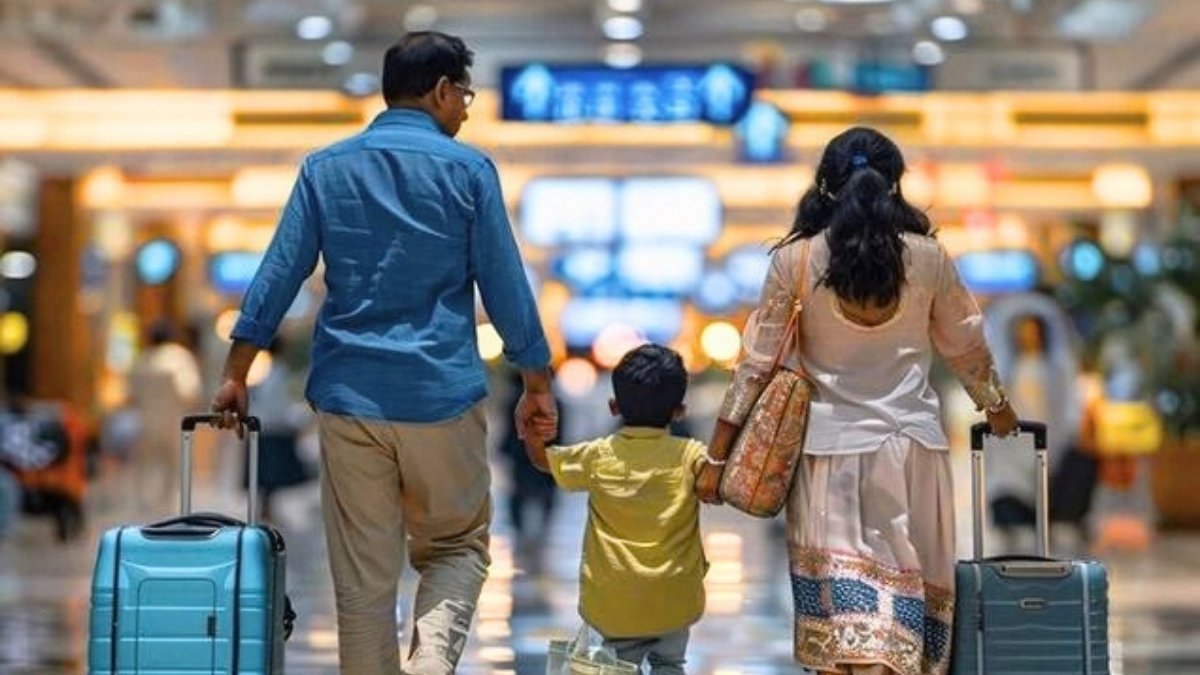
The United States remains a major destination for Nepali professionals, international students, and families seeking education and employment opportunities. However, changes in visa screening, documentation requirements, and immigration procedures mean that dependent family members need to pay close attention to the rules in 2026.
For Nepali families planning to join a spouse or parent in the United States, understanding the differences between H-4 and F-2 visas is particularly important. Applicants must also prepare for online-presence screening, keep their documents consistent, and understand the restrictions attached to their visa category.
The key point: Not every immigration proposal is a final rule. Applicants should distinguish requirements currently in effect from proposed changes that may affect future applications.
What Are US Dependent Visas?
US dependent visas allow eligible family members of certain temporary visa holders to accompany or join the principal visa holder in the United States.
The appropriate visa category depends on the principal applicant’s immigration status.
- H-4 visa: Generally for the spouse and unmarried children under 21 of an eligible H-category temporary worker, including an H-1B worker.
- F-2 visa: For the eligible spouse and unmarried children under 21 of an F-1 international student.
- J-2 visa: For eligible dependents of a J-1 exchange visitor.
These categories have different conditions. A dependent visa does not automatically provide permission to work, and the principal visa holder’s immigration status can affect how long dependents may remain in the country.

1. Expanded Social Media Screening for Dependent Visa Applicants
One of the most important developments for families applying from Nepal concerns online-presence screening.
The US Department of State announced in December 2025 that, effective December 15, 2025, online-presence reviews would be expanded to cover H-1B applicants and their H-4 dependents. Applicants in covered categories, including F, M, and J visa categories, were instructed to set their social media profiles to public.
The department’s published guidance continues to list H-4 and F-2 applicants among the categories subject to this screening. Read the official announcement from the US Department of State.
What does this mean for Nepali families?
Applicants should review their online presence before attending a visa interview. They should ensure that their application information is accurate and that their public online profiles do not contradict important details in their applications.

Applicants should not assume that screening is limited to the principal worker or student. Eligible dependents may be subject to the relevant screening procedures in their own applications.
A social media review does not automatically mean that a visa will be refused. Each application is assessed under the applicable immigration rules, and applicants must establish their eligibility for the visa requested.
2. H-4 Visa Rules for Spouses and Children of H-1B Workers
The H-4 category is particularly relevant to Nepali professionals whose spouses work in the United States under H-1B status.
Eligible spouses and unmarried children under 21 may apply for H-4 status to accompany or join the principal H-1B worker, subject to the applicable requirements.
However, H-4 status does not automatically authorize employment.
Can H-4 spouses work in the United States?
Certain H-4 spouses can apply for an Employment Authorization Document (EAD). Eligibility generally depends on the H-1B spouse’s immigration circumstances, such as having an approved immigrant petition or qualifying for an extension under specified provisions of US immigration law.
An eligible spouse must apply for employment authorization and receive the necessary authorization before beginning work.
The current regulation describes the eligibility conditions in 8 CFR § 214.2.
Is the government planning to change H-4 work authorization?
Yes, the US Department of Homeland Security has listed a proposal to remove employment-authorization eligibility for certain H-4 dependent spouses.
However, a proposal is not the same as a final regulation. As of October 2, 2026, the government’s regulatory agenda identifies this action as a long-term rulemaking item, with the proposed-rule date still to be determined.
Families should therefore avoid assuming that all existing H-4 work authorization has been cancelled. They should check the latest official USCIS guidance before making employment or immigration decisions.
The proposal is available through the US government’s regulatory agenda.
3. F-2 Visas for Dependents of International Students
Many Nepali students travel to the United States for undergraduate, graduate, and professional education. Eligible spouses and unmarried children under 21 may accompany or join an F-1 student using the F-2 category.
F-2 dependents must meet the relevant requirements and maintain their own lawful status.
Can F-2 dependents work?
F-2 status generally does not authorize employment in the United States. A spouse who wishes to work must determine whether they qualify for a different immigration category that permits employment.
F-2 children may attend school at the levels permitted under the applicable rules. Families should confirm current requirements with their university’s international student office or a qualified immigration professional.
Why should families monitor student status?
Dependent status is connected to the principal student’s immigration circumstances. If the F-1 student’s program, authorized stay, or immigration status changes, the family’s position may also be affected.
In 2026, families should pay particular attention to official announcements concerning student admission periods and status extensions. They should not assume that a visa stamp alone determines how long they may lawfully remain in the United States.
4. New Screening Does Not Replace Basic Visa Requirements
Although online-presence screening has attracted attention, applicants must still satisfy the ordinary requirements for their visa category.
For Nepali families, this means preparing a complete and consistent application and demonstrating the relationship to the principal visa holder.
Depending on the case, relevant documents may include:
- A valid passport for each applicant.
- The appropriate visa application confirmation and appointment documentation.
- Marriage certificates for spouses.
- Birth certificates for children.
- The principal applicant’s visa, immigration status, or student documents.
- Evidence of the principal applicant’s employment or enrollment.
- Financial documents demonstrating how the family will support itself, where required.
- Any additional documents requested by the US embassy or consular officer.
The precise checklist can vary according to the visa category, individual circumstances, and instructions issued for the application.
Applicants should consult the US Embassy in Nepal and the US Department of State’s visa information before submitting an application.
5. What Nepali Applicants Should Do Before Applying

Families can reduce avoidable delays by preparing early and checking official instructions carefully.
First, identify the correct visa category. H-4 and F-2 visas are not interchangeable. The principal applicant’s immigration category determines which dependent route may be available.
Second, check the principal applicant’s status. Confirm that the worker or student has the required documentation and that the dependent application is consistent with their current circumstances.
Third, review social media privacy settings. Applicants in covered categories should follow the State Department’s published instructions concerning public online profiles.
Fourth, check appointment availability and processing instructions. Appointment dates and processing times can change. Families should consult official embassy information rather than rely on old social media posts or unofficial estimates.
Fifth, plan finances carefully. Application fees, travel, housing, insurance, and everyday living expenses can add up. Families should understand the financial implications before making travel arrangements.
Finally, verify changes before acting. Immigration proposals may change during the rulemaking process. Applicants should check whether a measure is proposed, finalized, or already effective.
6. Questions Nepali Families Frequently Ask
Are US dependent visas cancelled in 2026?
The screening requirements discussed in this article do not amount to a cancellation of H-4 or F-2 visas. Applicants must continue to meet the applicable eligibility and documentation requirements.
Do H-4 spouses still have the right to work?
Certain eligible H-4 spouses may apply for employment authorization. The government has proposed a change affecting eligibility, but the proposal should not be confused with a final rule cancelling all existing eligibility.
Must H-4 and F-2 applicants make social media profiles public?
The State Department instructs applicants in covered visa categories, including H-4 and F-2, to make their social media profiles public or open for online-presence review. Applicants should follow the latest official instructions.
Can a dependent visa holder stay in the United States after the principal visa holder’s status ends?
Dependents generally cannot assume that their status remains valid independently of the principal visa holder. The outcome depends on the circumstances and applicable immigration rules. Families should seek qualified advice before the principal applicant’s status expires or changes.
Where can Nepali applicants check official updates?
The US Embassy in Nepal and the US Department of State provide official visa information. USCIS publishes information about immigration status and employment authorization.
Conclusion
US dependent visa changes in 2026 make it important for Nepali families to understand their visa category, prepare accurate documentation, and follow the latest screening instructions.
The expansion of online-presence reviews is a confirmed development affecting H-4 and F-2 applicants. Meanwhile, the proposal concerning H-4 spouse employment authorization should be treated as a proposal unless and until the government publishes an applicable final rule.
Before applying, families should verify current requirements through official US government sources and seek qualified immigration advice when their circumstances are complex. Careful preparation can help applicants understand their obligations and avoid relying on outdated information.