

Nepal’s startup ecosystem is entering a potentially important phase as Startup Summit Nepal 2026 launches a nationwide campaign aimed at encouraging young people to become entrepreneurs, create jobs and build businesses inside the country.
The campaign, launched at Tribhuvan University on August 6, 2026, is designed to go beyond a single event. Organizers say they plan to take the initiative across all seven provinces and 77 districts, working with universities, colleges, schools, government agencies, financial institutions and the private sector.
For Nepal, where thousands of young people leave the country every year in search of education, employment and better economic opportunities, the campaign raises an important question:
Can a stronger startup ecosystem give young Nepalis a reason to build their future at home?
The answer will depend on more than motivational speeches or entrepreneurship events. Nepal will need easier access to finance, better infrastructure, stronger mentorship, predictable policies and a market where innovative businesses can actually grow.
What Is Startup Summit Nepal 2026?

Startup Summit Nepal 2026 is a nationwide campaign promoting innovation, entrepreneurship and startup culture in Nepal.
The campaign was inaugurated at the Central Library Hall of Tribhuvan University under the theme “The Role of Startups in Nation Building.” Students, academics, entrepreneurs, investors, journalists and representatives from different sectors participated in the launch.
According to organizers, the initiative is intended to provide aspiring entrepreneurs with practical knowledge about:
- Business registration
- Business planning
- Market research
- Investment management
- Startup financing
- Startup loans
- Market expansion
- Legal procedures
- Challenges of running a business
The organizers also plan to take the campaign to educational institutions and communities throughout Nepal.
That nationwide approach could be important because entrepreneurship opportunities should not be limited to Kathmandu.
Why Does Nepal Need More Startups?
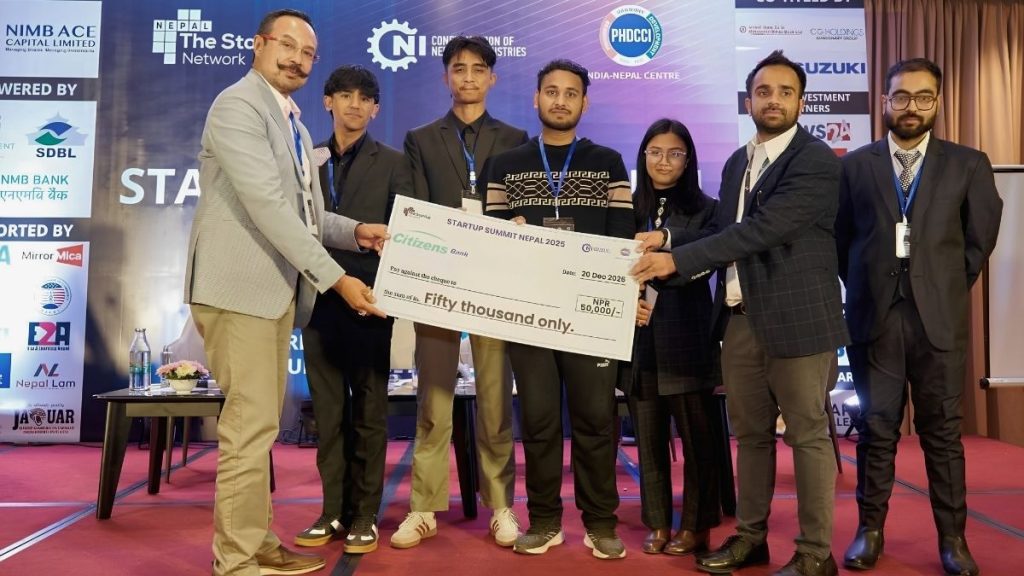
Nepal has no shortage of young people with ideas, skills and ambition. The bigger challenge is turning those ideas into sustainable businesses.
For many young Nepalis, the traditional path after school or university is to seek employment. Others consider studying or working abroad.
The startup model offers another possibility: creating employment rather than only seeking it.
That does not mean every young person should become an entrepreneur. Starting a business involves significant risks, and many startups fail.
However, a healthy startup ecosystem can create opportunities for people who have innovative ideas but cannot find suitable employment in traditional industries.
Startups can also introduce new technology, improve existing services and create businesses around problems that are unique to Nepal.
Recent examples demonstrate that potential already exists. A July 2026 “Code for Impact” hackathon brought together 190 companies and produced technology-focused solutions in areas including healthcare, education, tourism, agriculture, accessibility and finance.
This suggests that Nepal’s young innovators are not necessarily short of ideas. The challenge is creating the conditions that allow those ideas to survive and scale.
Can Startups Help Reduce Nepal’s Brain Drain?
Brain drain is one of the biggest reasons the new campaign matters.
Startup Summit Nepal 2026 organizers have explicitly identified youth migration as a major challenge and said they want to create opportunities that encourage talented Nepalis to build businesses at home.
The idea is relatively simple.
If talented graduates can find meaningful work, build companies and access investment in Nepal, fewer may feel that leaving the country is their only option.
However, startups alone cannot solve Nepal’s brain-drain problem.
Young people make decisions based on salaries, career opportunities, education, infrastructure, healthcare, quality of life and long-term economic stability.
Therefore, entrepreneurship should be viewed as one part of a broader strategy to retain talent.
What Opportunities Could Startup Summit Nepal Create?

The biggest potential benefit of the campaign is exposure.
A student with a business idea may know what problem they want to solve but have little knowledge about registering a company, preparing a business plan or finding financing.
Startup-focused programs can help bridge that knowledge gap.
1. More Entrepreneurship Education
Nepalese universities and colleges traditionally focus heavily on preparing students for employment.
Startup Summit Nepal organizers have argued that universities should also help produce job creators, not only job seekers.
Introducing practical entrepreneurship education could help students understand how businesses actually work.
2. Better Access to Mentors
A first-time founder can make expensive mistakes because they lack experience.
Connecting young entrepreneurs with experienced business owners, investors, and mentors could help them make better decisions about pricing, marketing, hiring and expansion.
3. Greater Awareness of Financing
Access to capital remains one of the major challenges for startups.
The campaign intends to educate aspiring entrepreneurs about startup financing and loans.
But information alone is not enough. Financial institutions also need suitable products that recognize the realities and risks of early-stage businesses.
4. Opportunities Outside Kathmandu
One of the most promising aspects of the campaign is its stated goal of reaching all seven provinces and 77 districts.
Nepal’s entrepreneurial potential is not concentrated entirely in Kathmandu.
Agriculture technology could develop in rural areas. Tourism startups could emerge in mountain and heritage destinations. Digital businesses can operate from smaller cities. Local entrepreneurs can develop solutions for transportation, education, healthcare and financial services.
A nationwide approach could therefore make Nepal’s startup ecosystem more geographically diverse.
What Are the Biggest Challenges?

It would be easy to become overly optimistic about Startup Summit Nepal 2026.
Launching an entrepreneurship campaign is relatively easy.
Building successful companies is much harder.
Access to Capital
Many promising businesses require investment before they can generate significant revenue.
Traditional lending can be difficult for startups because new companies may not have substantial collateral, established revenue, or a long credit history.
Nepal therefore needs a stronger combination of bank financing, angel investment, venture capital, and other forms of startup funding.
Policy and Bureaucracy
Entrepreneurs need predictable rules.
If registering a business, paying taxes, obtaining approvals or importing equipment becomes unnecessarily complicated, entrepreneurs can spend valuable time dealing with administration instead of developing their products.
A strong startup ecosystem requires institutions that make legitimate business activity easier, not harder.
Limited Market Size
Nepal has a relatively small domestic market.
That can make scaling difficult for certain businesses.
For technology companies, however, the internet provides an opportunity to target customers outside Nepal.
Nepali startups that develop competitive digital products could potentially serve international customers and bring foreign revenue into the country.
Lack of Experienced Talent
Ironically, the same brain drain that the campaign wants to address can also make it harder for startups to find experienced employees.
Successful companies need skilled developers, designers, marketers, financial professionals and managers.
Retaining and attracting this talent will be critical.
What Should Young Nepali Entrepreneurs Do?
Young people should not interpret the startup movement as a message that everyone must immediately launch a company.
Instead, they should treat entrepreneurship as a skill and career option.
Before starting a business, an aspiring entrepreneur should ask:
What problem am I solving?
A business idea is not necessarily valuable simply because it sounds innovative. The strongest startups usually solve a problem that customers are willing to pay to solve.
Young entrepreneurs should also:
- Research their target market.
- Talk to potential customers before investing heavily.
- Build a simple version of the product or service.
- Calculate costs carefully.
- Understand company registration and taxation requirements.
- Look for experienced mentors.
- Avoid taking unnecessary debt.
- Focus on revenue and customer satisfaction.
- Learn digital marketing and financial management.
- Consider whether the business can eventually expand beyond Nepal.
The advice presented at the Startup Summit launch also emphasized that successful businesses depend on vision, planning and perseverance—not simply large amounts of capital.
Can Startup Summit Nepal 2026 Change Nepal’s Economy?
It could help, but expectations should remain realistic.
One campaign cannot transform Nepal’s economy overnight.
The real test will be what happens after the events are over.
If the campaign leads to more students learning entrepreneurship, more startups receiving mentorship, better connections between investors and founders, easier access to finance and more businesses surviving beyond their early years, then it could make a meaningful contribution.
The involvement of universities, government agencies, financial institutions and private-sector organizations will also be important.
Nepal needs an ecosystem rather than isolated startup competitions.
The Bigger Picture for Nepal

Nepal’s startup story is no longer limited to a few technology companies in Kathmandu.
Young entrepreneurs are increasingly experimenting with businesses in areas such as agriculture, tourism, healthcare, education, financial technology and digital services.
The recent Code for Impact initiative, for example, highlighted startups working on practical problems ranging from home healthcare and accessibility to AI-powered agriculture and tourism.
There are also efforts from development organizations to strengthen Nepal’s entrepreneurship ecosystem. KOICA recently launched K-Connect, an initiative designed to connect entrepreneurs, investors, financial institutions and development partners while improving access to knowledge, networks and financing.
Together, these developments indicate that Nepal’s entrepreneurship ecosystem is receiving increasing attention.Is Georgia Safe for Nepali Students? A Complete Guide for 2026
The next challenge is turning that attention into sustainable businesses.
Frequently Asked Questions
What is Startup Summit Nepal 2026?
Startup Summit Nepal 2026 is a nationwide campaign promoting entrepreneurship, innovation and startup culture in Nepal. It was launched at Tribhuvan University in August 2026 and is planned to expand across all seven provinces and 77 districts.
Who can benefit from Startup Summit Nepal 2026?
Students, aspiring entrepreneurs, existing startup founders and young professionals can potentially benefit from entrepreneurship education, networking, mentoring and information about financing and business development.https://moics.gov.np/
Can startups reduce youth migration from Nepal?
Startups could create additional career and business opportunities in Nepal, but entrepreneurship alone cannot solve youth migration. Broader improvements in employment, wages, education, infrastructure and economic opportunities are also necessary.
What are the biggest challenges for Nepali startups?
Access to finance, market size, regulatory complexity, skilled talent, infrastructure and the ability to scale beyond Nepal remain important challenges.Is Finland Good for Nepali Students? What Education Consultants Don’t Tell You
Is Nepal a good place to start a business?
Nepal has opportunities in sectors including tourism, agriculture, technology, education, healthcare and digital services. However, entrepreneurs should carefully assess regulations, financing, market demand and operating costs before investing.The Hidden Struggles of Nepali Students in the UK
Final Thoughts
Startup Summit Nepal 2026 comes at an important time for the country’s economy and its young population.
Nepal does not lack ambitious young people or innovative ideas. What it needs is an environment where those ideas can become sustainable companies.https://tu.edu.np/
The campaign’s plan to reach universities, schools, entrepreneurs and communities across all seven provinces could help spread entrepreneurship beyond Kathmandu. But its long-term success will depend on what happens after the workshops and events.
If Nepal can combine entrepreneurship education with access to finance, better policies, mentorship, technology and larger markets, startups could become an increasingly important source of jobs and innovation.Why More Nepali Students Are Choosing China for Higher Education in 2026: Costs, Scholarships & Career Opportunities
For young Nepalis, the message is not simply to “stay in Nepal.”
It is to create an economy in which staying, building and succeeding in Nepal becomes a realistic choice.
1 thought on “Startup Summit Nepal 2026: What It Means for Nepal’s Young Entrepreneurs”