
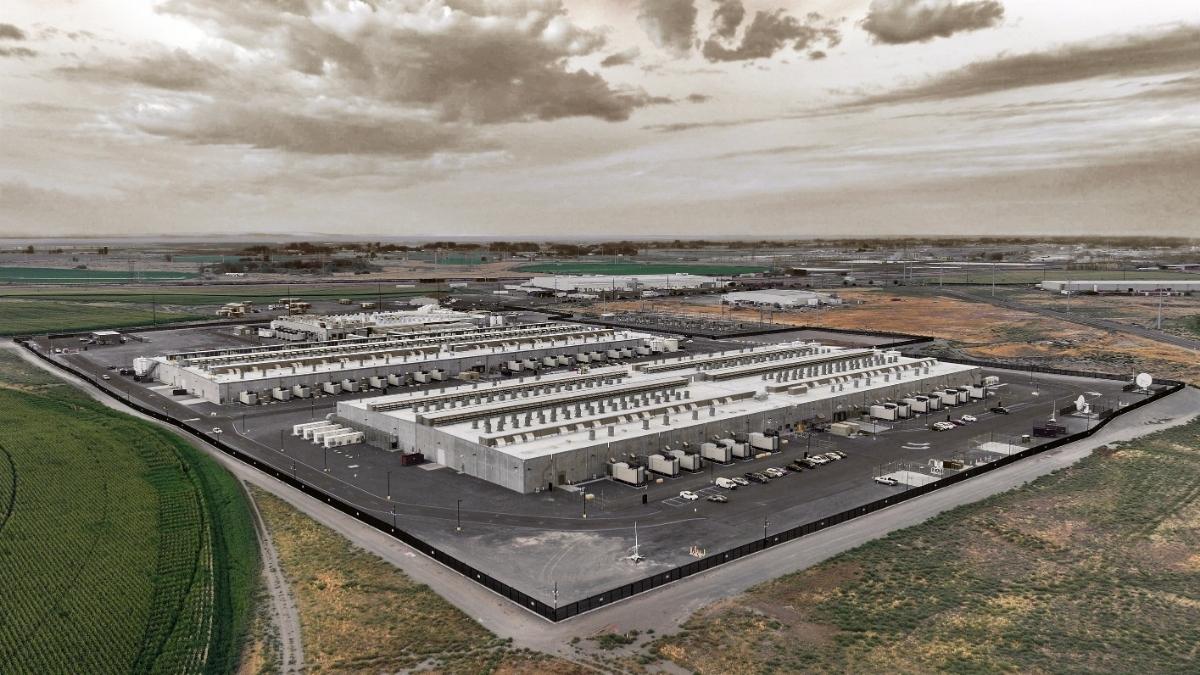
The U.S. Senate has blocked a House-passed bill aimed at addressing one of the biggest economic questions surrounding the rapid expansion of artificial intelligence: who should pay for the electricity infrastructure needed by massive data centers?
The Ratepayer Protection Act passed the U.S. House of Representatives by an overwhelming 417-3 vote on September 16, 2026. But one day later, the measure stalled in the Senate after Sen. Martin Heinrich, a Democrat from New Mexico, objected to an attempt by Sen. Jon Husted, a Republican from Ohio, to pass it through unanimous consent.
The dispute is about more than one bill. It reflects a growing debate over America’s AI boom, rapidly rising electricity demand, aging power infrastructure and whether ordinary electricity customers could end up paying some of the costs associated with new data centers.
What Is the Data Center Bill?
The legislation is called the Ratepayer Protection Act, or H.R. 9340.
The bill would require state utility regulators to consider standards designed to ensure that large electricity users, including data centers, cover the incremental costs of power infrastructure required to serve them.
Those costs can include new electricity generation, transmission lines, substations and distribution infrastructure.
The legislation focuses on very large electricity users, with the House measure applying to loads of 100 megawatts or more. It would also require consideration of financial assurances and other protections if a large customer leaves a project or changes its power requirements.
The basic issue is straightforward: when a massive data center needs substantially more electricity, who pays for the infrastructure required to provide that power?
Supporters of the House legislation argue that the companies creating the additional demand should bear the associated costs rather than shifting them to existing electricity customers.
Why Did the Senate Block the Bill?

Sen. Jon Husted brought the House-passed Ratepayer Protection Act to the Senate floor on September 17 and sought to move it through unanimous consent, a procedure that can allow legislation to advance without a lengthy floor process when there is no objection.
Sen. Martin Heinrich objected.
Heinrich did not argue that data centers should be exempt from paying for the infrastructure they require. Instead, he said the House bill did not go far enough because it primarily asks states to consider adopting protections rather than establishing stronger federal requirements.
Heinrich promoted his own legislation, the GRID Savings Act, as an alternative approach. According to the Senate Energy and Natural Resources Committee, that proposal would establish federal requirements involving large-load interconnections, cost allocation, financial security and disclosure of cost estimates.
Sen. Bernie Moreno, a Republican from Ohio, then objected to Heinrich’s attempt to advance his alternative bill.
As a result, neither proposal moved through the Senate that day.
What Did the House Bill Actually Do?
It is important to understand what the Ratepayer Protection Act would—and would not—do.
The bill does not directly set household electricity rates.
Instead, it would require states to consider standards that could make large electricity customers responsible for the incremental costs associated with serving them.
The House measure would amend the federal Public Utility Regulatory Policies Act, commonly known as PURPA.
Under the legislation, states would have to consider standards concerning large electricity loads and whether those customers should cover the full incremental costs of the infrastructure needed to serve them.
That distinction matters because the bill does not simply impose a nationwide electricity charge on data centers.
Its approach is more focused on encouraging state regulators to establish rules governing large-load customers.
Why Are Data Centers Becoming an Electricity Issue?
The rapid growth of artificial intelligenceis creating enormous demand for computing power.
AI models require large amounts of computing infrastructure, and the companies developing them are building or planning increasingly large data centers.
These facilities can consume as much electricity as small cities, according to industry and energy analysts cited by Utility Dive.
That creates a challenge for electricity systems.
A new data center may require utilities to build or upgrade transmission lines, substations, generation capacity and other infrastructure.
Those investments can be expensive.
The central policy question is whether those costs should be recovered primarily from the company requesting the additional electricity capacity or shared more broadly among electricity customers.
That debate is now moving into the center of U.S. energy and technology policy.
Could Data Centers Raise Electricity Bills?
This is one of the most important questions behind the legislation.
Supporters of stronger ratepayer protections argue that existing households and businesses should not be forced to absorb infrastructure costs created by enormous new electricity demands from data centers.
Sen. Husted has argued that companies creating the additional demand should pay the costs required to serve them.
Critics of the House bill, however, say its protections are not strong enough.
Utility Dive reported that the legislation would largely reinforce regulatory changes already underway in many states and would only require states to consider adopting the standards rather than mandating a specific national approach.
The impact on individual electricity customers will therefore depend heavily on state utility policies, local grid conditions and how infrastructure costs are allocated.
What Is the GRID Savings Act?
The Senate disagreement produced a second proposal.
Sen. Heinrich’s GRID Savings Act is designed to establish stronger federal requirements for large electricity users such as data centers.

Heinrich argues that voluntary agreements and state-level consideration are insufficient and that data centers should directly bear the costs associated with connecting them to the power grid.
The proposal would give the Federal Energy Regulatory Commission a role in establishing requirements for large-load interconnections and cost allocation.
Heinrich’s proposal was also blocked when Sen. Bernie Moreno objected to the request to advance it.
This means the Senate currently has no new federal data-center ratepayer legislation headed to the president as a result of the September 17 proceedings.
Why Is AI at the Center of the Debate?
The data-center debate is closely connected to the expansion of artificial intelligence.
Technology companies are investing heavily in AI infrastructure, and that requires enormous computing capacity.
As more AI data centers are built, utilities must determine how to provide enough electricity while maintaining reliability.
That can require new generation facilities, transmission infrastructure and other grid investments.
The issue has consequently brought technology companies, utilities, regulators, lawmakers and consumer advocates into the same policy debate.
Axios reported this week that policymakers and energy leaders are increasingly focused on who should bear the costs of the AI-driven power boom.
The debate could therefore become increasingly important as the U.S. expands its AI infrastructure.
Why Did the House Vote 417-3?
The House vote demonstrated unusually broad bipartisan support for addressing data-center-related electricity costs.
The Ratepayer Protection Act passed 417-3 on September 16.
The legislation’s supporters included lawmakers who want the United States to continue expanding its AI and technology infrastructure while preventing ordinary electricity customers from absorbing infrastructure costs.
However, the overwhelming House vote did not mean lawmakers agreed on exactly how data centers should be regulated.
The Senate debate showed that distinction clearly.
Both sides raised concerns about consumers potentially paying for data-center infrastructure, but they disagreed over whether the House bill provided sufficiently strong protections.
What Happens to the Bill Now?
The Ratepayer Protection Act has stalled in the Senate after the September 17 unanimous-consent attempt was blocked.
That does not necessarily mean the legislation is permanently dead.
The bill could potentially return for further Senate consideration, but its path becomes more complicated without unanimous consent.
Utility Dive reported that the Senate’s compressed schedule before the November midterm elections could make passage more difficult.
The debate could also continue through other federal or state legislation.
States are already developing their own rules for large electricity users, and Utility Dive reported that only 13 states lacked utility tariffs addressing data centers and other large loads as of July, with some of those states considering new requirements.
What Does This Mean for Big Tech?
The debate could have significant implications for major technology companies building AI infrastructure.
Large technology firms need access to enormous amounts of electricity to operate data centers.
If governments require companies to pay more of the costs associated with new generation and grid infrastructure, the cost of developing AI facilities could increase.
On the other hand, stronger cost-allocation rules could provide greater certainty for utilities and communities by making it clearer who is responsible for infrastructure investments.
The policy question is therefore not simply whether America should build more data centers.
It is also about how quickly they should be built, where they should be located and who should pay for the electricity infrastructure they require.
Why This Matters to American Households
For ordinary consumers, the debate ultimately comes down to electricity bills.
If utilities need to make billions of dollars in investments to accommodate new large-scale electricity customers, regulators have to determine how those costs are recovered.
One approach is to require the new customer to pay the incremental cost.
Another possibility is that some costs are recovered through broader utility rates, depending on state rules and regulatory decisions.
The Ratepayer Protection Act attempts to address that question by pushing states to consider stronger protections for existing ratepayers.
The Senate disagreement is therefore part of a much larger debate about how the economic benefits and infrastructure costs of the AI boom should be distributed.
Frequently Asked Questions
What data center bill did the Senate block?
The Senate blocked an attempt to quickly pass the Ratepayer Protection Act, which had passed the House 417-3. The legislation would require states to consider standards designed to make large electricity customers pay the incremental costs of infrastructure needed to serve them.
Why did Sen. Martin Heinrich object?
Heinrich argued that the House bill did not go far enough because it relies on states considering standards rather than imposing stronger requirements. He promoted the GRID Savings Act as an alternative.
What is the Ratepayer Protection Act?
It is legislation intended to prevent existing electricity customers from bearing the full cost of grid and power infrastructure required by very large electricity users, including data centers.
Why do AI data centers need so much electricity?
AI systems require large amounts of computing power. Data centers house the servers and other equipment needed to run AI models and other digital services, creating substantial electricity demand.
Will the bill increase or decrease electricity prices?
The bill itself does not directly set household electricity prices. Its purpose is to influence how infrastructure costs associated with large electricity customers are allocated. The effect on individual customers would depend on state regulations and utility policies.
What happens next?
The legislation could return for further consideration, but the September 17 attempt to pass it by unanimous consent failed. State governments and Congress are likely to remain involved in the broader debate over data centers, AI infrastructure and electricity costs.
Final Thoughts
The Senate’s decision to block the Ratepayer Protection Act highlights a growing policy challenge created by the AI boom.
The United States wants to expand data-center infrastructure to support artificial intelligence and other technologies, but that expansion requires enormous amounts of electricity and significant investment in the power grid.
The House bill passed overwhelmingly, but the Senate debate revealed disagreement over how strong federal protections for electricity customers should be.
For consumers, the central question is simple: when massive data centers require new power infrastructure, who should pay for it?
For technology companies, the answer could affect the cost and location of future AI facilities.
And for policymakers, the challenge is finding a balance between expanding America’s technology infrastructure and ensuring that the costs of that expansion are not unfairly shifted onto existing electricity customers.
The September 17 Senate action did not resolve that debate. It may instead mark the beginning of a much larger national conversation about AI, electricity and who pays for America’s next generation of digital infrastructure.