
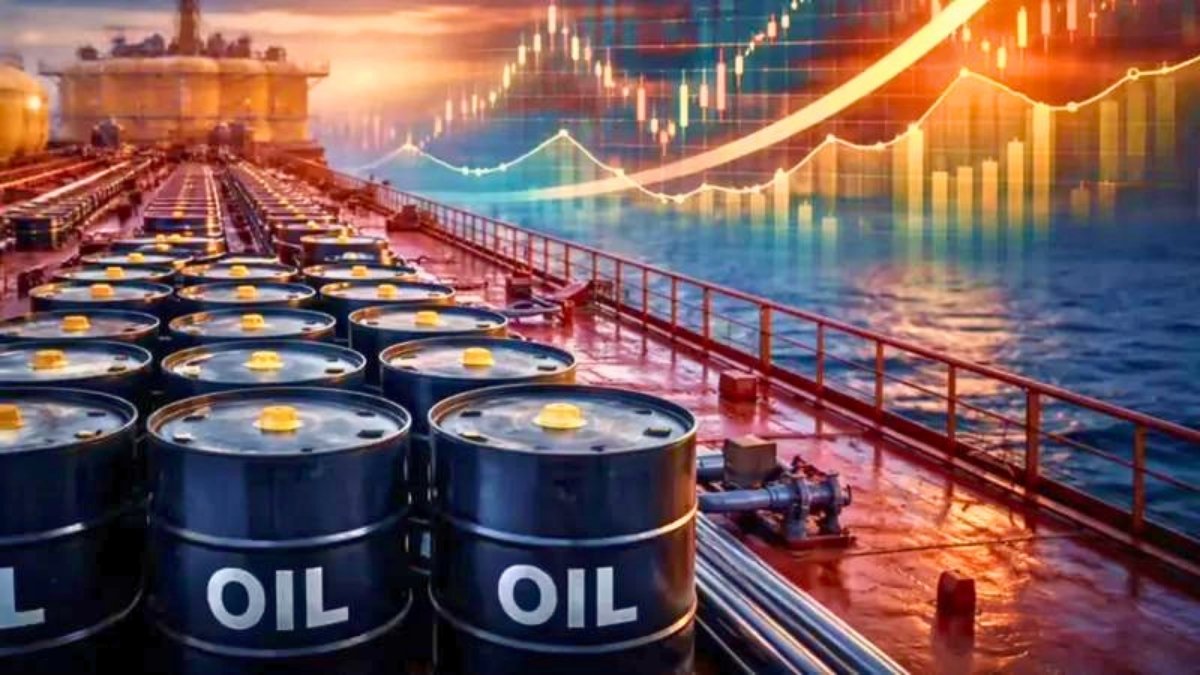
Oil prices have surged back above $108 a barrel, putting fresh pressure on the global economy and raising concerns about inflation just as major central banks prepare to make important interest-rate decisions.
Brent crude rose to around $108 a barrel on Monday after renewed attacks and disruptions to energy infrastructure in the Middle East. The latest escalation includes the temporary shutdown of Saudi Arabia’s East-West oil pipeline, a major route that helps the kingdom move crude without relying entirely on the Strait of Hormuz.
The sudden increase in oil prices matters far beyond the energy market.
Higher crude prices can increase fuel and transportation costs, raise inflation, squeeze household budgets and make it more difficult for central banks to reduce interest rates.
The timing is particularly important because the U.S. Federal Reserve is meeting September 15–16, while markets are also watching monetary-policy decisions in Japan and the United Kingdom.
So, what is driving oil prices higher, and what could $108 oil mean for the global economy?
Why Are Oil Prices Rising?
The latest oil-price surge is primarily connected to growing concerns about global supply.
Renewed fighting and attacks in the Middle East have disrupted important energy infrastructure and shipping routes. Saudi Arabia’s East-West pipeline was temporarily shut after an attack, raising concerns about how much crude can reach export markets if the disruption continues. Reuters reported that the pipeline can handle a substantial volume of Saudi crude and that the shutdown could potentially affect around 4% of global oil supply.
The situation is particularly sensitive because the region already faces disruption around major maritime routes.

The Strait of Hormuz is one of the world’s most important oil chokepoints. Any prolonged disruption there could have a much larger effect on global energy supplies and prices.
Markets are therefore reacting not only to the amount of oil currently unavailable but also to the possibility that the disruption could become longer or more widespread.
Brent crude briefly reached approximately $108.65 per barrel, while U.S. West Texas Intermediate also climbed above $100.
Why Does $108 Oil Matter?
Oil is one of the most important inputs in the global economy.
It is used directly for gasoline, diesel, aviation fuel and heating. But its economic influence goes much further.
Oil affects the cost of:
- Transportation
- Manufacturing
- Agriculture
- Shipping
- Air travel
- Plastics
- Chemicals
- Construction
- Food distribution
When crude becomes more expensive, businesses often face higher operating costs.
Some companies absorb those costs, but others eventually pass them on to consumers.
That is why a sustained oil-price increase can create an inflation problem.
Could Higher Oil Prices Cause Another Inflation Wave?
This is one of the biggest concerns facing policymakers.
The global economy has spent years dealing with elevated inflation, and central banks have been trying to bring price growth back toward their targets.
A sudden oil-price increase makes that job more difficult.
Higher fuel prices can raise transportation costs, while higher energy expenses can increase the cost of producing and delivering goods.
The effect does not necessarily happen immediately.
If oil remains above $100 for an extended period, however, the impact can gradually spread through the economy.
Europe is already watching this issue closely. European Central Bank policymaker Martins Kazaks said on September 14 that there is a growing case for further monetary tightening if higher energy costs begin feeding more persistently into wages and prices. Eurozone inflation reached 3.3% in August.
That demonstrates why the oil story is becoming a central-bank story.
Why the Federal Reserve Is Watching Oil
The U.S. Federal Reserve faces a difficult situation.
Markets are expecting the Fed to raise interest rates this week, with oil prices adding to concerns about renewed inflation. Reuters reported on September 14 that markets were pricing in roughly a 90% probability of a 25-basis-point rate increase at the September meeting.
The problem for the Fed is that higher oil prices can create inflation without necessarily producing stronger economic growth.
That is an uncomfortable combination.
If businesses and consumers have to spend more on energy, they may have less money available for other purchases and investments.
At the same time, the central bank may feel pressure to keep monetary policy tighter to prevent temporary energy inflation from becoming embedded in the broader economy.
This is sometimes described as a growth-versus-inflation dilemma.
What Happens to Interest Rates If Oil Stays Above $100?
If oil prices quickly fall back, central banks may be able to treat the increase as a temporary shock.
But if crude remains above $100 for months, policymakers could face a much harder decision.
Persistent energy inflation could delay interest-rate cuts or even encourage additional increases.
That would affect borrowing costs for:
- Mortgages
- Credit cards
- Business loans
- Car loans
- Corporate debt
- Government borrowing
For consumers, the result could be higher monthly payments.
For businesses, higher financing costs could discourage investment and hiring.
This is why investors are watching the oil market closely as central banks prepare for their September decisions.
U.S. Bond Yields Are Already Sending a Warning
Another important part of the story is the bond market.
The U.S. 10-year Treasury yield briefly approached 5%, reaching around 4.99% on September 14, its highest level in nearly three years. Rising oil prices and inflation concerns have contributed to the increase.
Bond yields matter because they influence borrowing costs across the economy.
When Treasury yields rise, other borrowing costs can also increase.
Higher yields can additionally make bonds more attractive compared with stocks, potentially putting pressure on equity valuations.
If oil prices remain elevated and inflation expectations rise further, investors could demand even higher yields.
That would create another source of pressure for financial markets.

What Does Expensive Oil Mean for Stock Markets?
Higher oil prices do not affect every company in the same way.
Energy producers can benefit from higher crude prices because their potential revenue increases.
But many other businesses face higher costs.
Airlines are particularly sensitive because jet fuel represents a major operating expense.
Transportation companies, manufacturers, chemical producers and some consumer businesses can also face higher costs.
Higher interest rates can add another layer of pressure.
When investors expect rates to remain higher for longer, technology and growth stocks can become more vulnerable because a larger portion of their expected profits may come years into the future.
This creates a complicated environment for global stock markets.
Oil can benefit energy companies while simultaneously hurting businesses that depend heavily on fuel and credit.
Could Oil Reach $120?
That is one of the biggest questions investors are asking.
There is no certainty that crude will reach $120, but prolonged supply disruption could push prices substantially higher.
Reuters reported that analysts are watching the possibility of further disruption, particularly if the conflict continues to interfere with oil production and transportation.
However, oil prices are highly sensitive to expectations.
If diplomatic negotiations improve or disrupted production returns quickly, prices could fall just as rapidly.
That is why the next few days could be extremely important.
The market is effectively trying to answer one question:
Is the current disruption temporary, or is it becoming a long-lasting global supply problem?
How Could Higher Oil Prices Affect Ordinary Consumers?
The most visible effect for consumers is usually fuel.
When crude oil becomes more expensive, gasoline and diesel prices can eventually increase, although the relationship is not immediate and depends on taxes, refining costs, exchange rates and local market conditions.
Higher fuel costs can then affect transportation.
Delivery companies may face higher expenses. Airlines can raise fares. Public transportation systems may face higher operating costs.
Food prices can also be affected because agriculture and food distribution depend heavily on fuel and transportation.
That means consumers can feel the impact of an oil shock even if they never directly purchase crude oil.
Developing Economies Face an Additional Risk
Oil-price increases can be particularly challenging for countries that import most of their energy.
When crude becomes more expensive, those countries must spend more money on energy imports.
That can put pressure on their currencies and increase inflation.
A weaker currency can make imported oil even more expensive, creating a difficult cycle.
This is particularly important for many Asian economies.
India, for example, reported August consumer inflation of 4.82%, up from 4.45% in July, with transportation and food prices among the areas contributing to the increase. Reuters said the result strengthened expectations that the Reserve Bank of India could face pressure to tighten policy.
For oil-importing economies, the combination of expensive crude, weaker currencies and higher global interest rates can be particularly uncomfortable.
What About Gold?
Oil and gold can sometimes move higher at the same time during periods of geopolitical uncertainty.
Gold is often viewed as a safe-haven asset, while higher oil prices can increase inflation expectations.
But the relationship is not simple.
If rising oil prices cause central banks to raise interest rates aggressively, higher bond yields can create pressure on gold because gold does not generate interest income.
On the other hand, if geopolitical uncertaintybecomes severe, demand for safe-haven assets can increase.
That is why investors are watching both markets as the current crisis develops.
What Should Investors Watch Next?
Several indicators could determine whether the current oil surge becomes a temporary spike or a much larger economic problem.
1. Middle East supply disruptions
The biggest factor is whether attacks and infrastructure disruptions continue.
2. Strait of Hormuz shipping
Any significant deterioration around the Strait of Hormuz could have major implications for global energy supplies.
3. Brent crude
A sustained move above $100 is more significant than a brief spike.
4. Federal Reserve policy
The Fed’s September decision and its guidance about future interest rates will be closely watched.
5. U.S. Treasury yields
A sustained move toward or above 5% could increase pressure on financial markets.
6. Inflation data
If higher energy costs begin appearing more strongly in consumer-price data, central banks could become more cautious about cutting rates.
What Could Happen Next?
There are three broad possibilities.
First, the crisis could ease.
If supply disruptions are resolved and shipping routes become safer, oil prices could fall rapidly.
Second, the disruption could continue.
In that case, crude could remain above $100 and central banks could face prolonged inflation pressure.
Third, the crisis could escalate.
A much larger disruption to Middle Eastern oil production or shipping could push prices significantly higher and create a much more serious global inflation shock.
The third scenario would be the most damaging for the global economy.
The Bottom Line
The jump in oil prices above $108 a barrel is more than an energy-market story.
It is becoming a story about inflation, interest rates, currencies, bonds, stock markets and household costs.
The immediate trigger is the growing disruption to Middle Eastern energy infrastructure and shipping routes. Saudi Arabia’s East-West pipeline shutdown has added to fears about global supply, while continued uncertainty around the Strait of Hormuz is keeping traders nervous.
The biggest question is how long the disruption lasts.
If oil quickly retreats, the current shock may have only a temporary economic impact.
But if crude remains above $100 for an extended period, central banks could face a much more difficult fight against inflation.
That makes the next several weeks especially important.
The world economy is already balancing high borrowing costs, geopolitical uncertainty and changing growth expectations.
A prolonged oil shock could add another major challenge.
For consumers, businesses and investors, the key number to watch may no longer be whether oil reaches $110. It may be how long it stays there.