

Michael Burry is one of the most recognizable investors of the modern era. He became famous for predicting the U.S. housing-market collapse and betting against subprime mortgages, a story later portrayed by Christian Bale in The Big Short.
In 2025 and 2026, Burry once again attracted enormous attention—not because of the housing market, but because of his increasingly bearish views on artificial intelligence stocks, Nvidia and the wider AI investment boom.
His investment activity has changed significantly since the original version of this article was published. Scion Asset Management is no longer providing investment-management services, while Burry has shifted his public focus to Cassandra Unchained, his investment-focused Substack publication.
So, how much is Michael Burry worth in 2026? What happened to Scion? Why is he bearish on Nvidia and AI stocks? And what are his latest views?
Here is the latest picture.
Who Is Michael Burry?
Michael James Burry is an American investor and physician best known for identifying the risks building inside the U.S. housing market before the 2008 financial crisis.
After studying economics and later earning his medical degree from Vanderbilt University, Burry began developing a reputation as a value investor. He eventually left medicine and founded Scion Capital in 2000.
His early investment philosophy was heavily influenced by Benjamin Graham-style value investing: look for businesses or securities whose market prices appear significantly different from their underlying value.
Burry became internationally famous after his fund purchased credit-default swaps against subprime mortgage securities before the housing bubble collapsed.
The trade became the centerpiece of Michael Lewis’s book The Big Short and the subsequent 2015 movie, in which Burry was portrayed by Christian Bale.
But Burry’s investment career did not end with the financial crisis.
Over the years, he has taken positions across a wide range of industries and repeatedly warned investors about speculative market behavior.https://michaeljburry.substack.com/
Michael Burry Net Worth in 2026
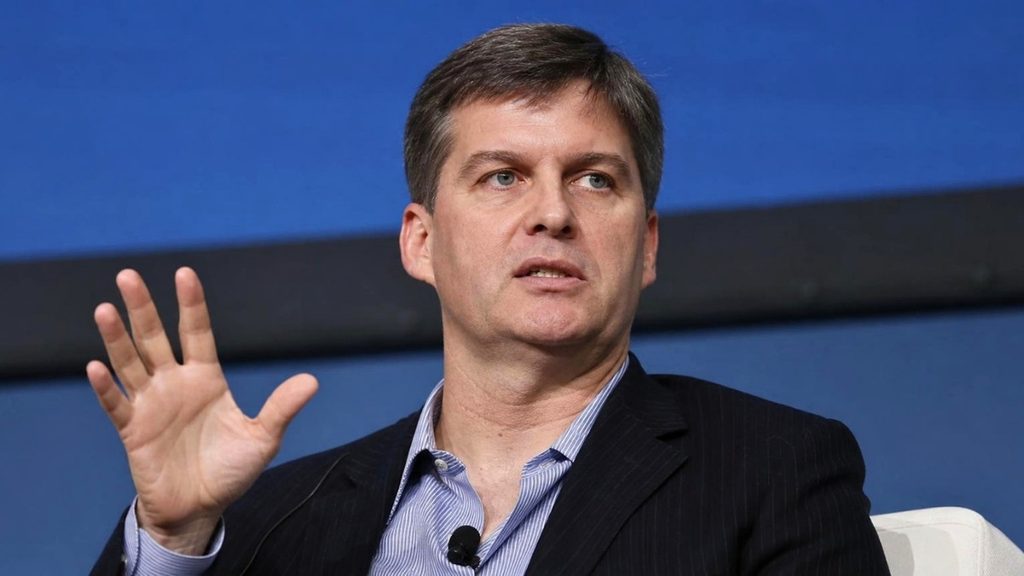
Michael Burry’s exact personal net worth is not publicly disclosed.
Various websites and financial publications have estimated his wealth at approximately $300 million, but that figure should be treated as an estimate rather than an independently verified number.
Burry is not listed as a billionaire by major billionaire rankings, and there is no reliable public filing that establishes his precise personal net worth.
His wealth has been built through decades of investing, fund management and successful—and sometimes controversial—market positions.
Michael Burry Net Worth: Quick Facts
| Detail | Information |
|---|---|
| Estimated net worth | Around $300 million, according to widely circulated estimates |
| Actual verified figure | Not publicly disclosed |
| Profession | Investor and former physician |
| Famous for | Predicting the U.S. housing-market crash |
| Former firm | Scion Asset Management |
| Current public investment platform | Cassandra Unchained |
| Best-known film portrayal | Christian Bale in The Big Short |
The $300 million figure should therefore be viewed as an estimate, not a confirmed balance-sheet figure.
What Happened to Scion Asset Management?
One of the biggest developments since the original 2025 version of this article is the change in Burry’s relationship with Scion.
Scion Asset Management is no longer providing investment-management services, according to the firm’s official website.
The website now directs visitors toward Cassandra Unchained, describing it as Burry’s sole focus.
This is important because older articles may still describe Burry as actively running a conventional hedge fund under Scion.
That description is outdated.
Burry himself says that after roughly 25 years of professionally managing funds, he left the hedge-fund business to focus on writing and sharing investment ideas.
What Is Cassandra Unchained?
Cassandra Unchained is Michael Burry’s investment-focused publication on Substack.
Rather than simply managing money behind the scenes, Burry now uses the platform to discuss:
- Stocks
- Market valuations
- Economic trends
- Investment bubbles
- Special situations
- Historical market patterns
- His investment research and ideas
Burry has said that the publication allows him to communicate more openly than he could while operating under the regulatory and compliance restrictions associated with professional fund management.
The publication has become an important source for understanding Burry’s current thinking.
It also means investors should be careful when reading older stories based solely on Scion’s historical SEC filings.
Michael Burry and Nvidia
Nvidia has become one of the central companies in Burry’s latest investment commentary.
In late 2025, Scion disclosed bearish positions involving Nvidia and Palantir, with Burry warning that parts of the technology market were showing signs of a speculative bubble.
His argument was not simply that Nvidia was a bad company.
Instead, Burry questioned whether the enormous expectations surrounding AI infrastructure and future profits had pushed valuations too far.
That distinction is important.
A bearish position on a stock does not necessarily mean the investor believes the underlying company will fail.
A company can continue growing while its stock price falls if investors previously priced in unrealistic expectations.
Is Michael Burry Still Betting Against Nvidia?
As of August 2026, Burry continues to express bearish views on Nvidia and parts of the AI trade.
Recent reporting indicates that he has maintained bearish positions involving Nvidia while also taking positions against other AI-related companies.
However, investors should be careful when interpreting individual options positions.
A put option does not necessarily mean that an investor expects a company to collapse. Options can be used for hedging, speculation or expressing a view on valuation and volatility.
Therefore, headlines such as “Michael Burry is short Nvidia” should always be interpreted in the context of the specific filing, option structure and reporting period.
Why Is Michael Burry Bearish on AI?
Burry’s broader argument is about valuation and capital spending, rather than simply artificial intelligence technology.
He has repeatedly questioned whether the enormous amount of money being invested in AI infrastructure will generate sufficient returns for everyone involved.
His criticism focuses on several areas:
1. Extremely High Valuations
AI companies have attracted enormous investor expectations.
Burry believes some investors may be pricing companies for years of extraordinary growth, leaving little room for disappointment.
2. Massive AI Infrastructure Spending
Technology companies are spending enormous sums building data centers and buying advanced processors.
Burry has questioned whether all of that capital expenditure can ultimately produce attractive economic returns.
3. Rapidly Changing Technology
AI hardware evolves quickly.
That creates a difficult question for investors: how long will today’s expensive computing infrastructure remain economically valuable?
Burry’s concerns therefore extend beyond individual stocks.
He is questioning the economic assumptions behind the broader AI investment cycle.
Michael Burry’s Latest Nvidia Warning: Etched
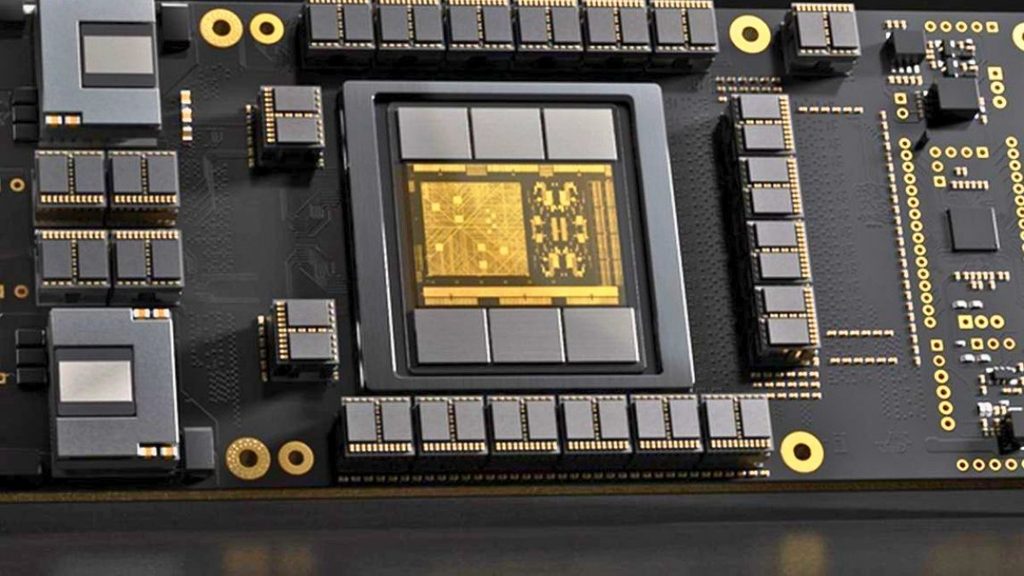
One of Burry’s most recent Nvidia-related comments came in August 2026.
He highlighted Etched, an AI chip startup developing specialized hardware for AI inference, and described it as serious competition for Nvidia.
Etched has attracted significant investment and former Nvidia talent.
The company has also drawn attention because of its focus on specialized AI chips rather than trying to replicate Nvidia’s entire GPU business.
Burry pointed to Etched’s claims about rapidly deploying its hardware for inference workloads and argued that the startup deserves attention as a potential competitor.
This does not mean Nvidia’s dominance is about to disappear.
Nvidia remains one of the most powerful companies in AI computing, and competing successfully against its hardware, software ecosystem and customer relationships is extremely difficult.
But Burry’s point illustrates an important investment question:
Could specialized AI chips eventually take market share from general-purpose AI accelerators?
That question could become increasingly important as AI inference becomes a larger part of the industry’s economics.
Burry’s AI Bubble Thesis Is Bigger Than Nvidia
It would be a mistake to reduce Burry’s current investment thesis to simply “Michael Burry hates Nvidia.”
His concerns are much broader.
He has criticized the way companies, investors and financial institutions are funding the massive expansion of AI infrastructure.
In one of his 2026 writings, Burry examined financing connected with Google’s TPU infrastructure and Anthropic as part of his broader research into AI economics.
His continuing research suggests that he is examining the financial structure surrounding AI, not merely trying to predict the next Nvidia earnings report.
That is consistent with his history.
Burry became famous not because he predicted that housing would stop existing, but because he identified a mismatch between the apparent value of mortgage-related securities and the risks embedded inside them.
His current argument follows a similar framework: the technology may be real, but the prices and financial assumptions surrounding it may still be excessive.
Has Michael Burry Been Right About AI?
That question is much harder to answer.
Burry has correctly identified major market bubbles in the past, most famously the U.S. housing bubble.
However, being early can be extremely costly in financial markets.
A stock can remain overvalued for years before eventually falling.
Meanwhile, companies such as Nvidia can continue producing enormous revenue and profits even while investors debate whether the stock is expensive.
Therefore, Burry’s bearish position should not automatically be interpreted as proof that an AI crash is coming.
It is better understood as a contrarian investment thesis that challenges the market’s assumptions about future growth, capital expenditure and returns.
Michael Burry’s Investment Philosophy
Burry is fundamentally associated with value investing.
His approach has historically involved looking beyond popular narratives and examining what he believes businesses and securities are actually worth.
Some recurring characteristics of his investment style include:
- Contrarian thinking
- Fundamental analysis
- Valuation discipline
- Willingness to invest against popular opinion
- Focus on downside risk
- Patience
- Searching for market mispricing
His investment history demonstrates that he is willing to take unpopular positions when he believes the market has become too optimistic.Anil Agarwal Net Worth in 2026: How Rich Is the Vedanta Founder?
That makes his current AI warnings particularly interesting to investors.
Michael Burry vs. Nvidia: What Investors Should Watch
The debate between Burry and Nvidia bulls is ultimately about several major questions.
Can AI spending generate sufficient returns?
Companies are spending unprecedented amounts on computing infrastructure.
The long-term investment case depends on whether those investments generate enough revenue and productivity gains to justify their cost.
Will Nvidia maintain its competitive advantage?
Nvidia currently benefits from hardware, software, developer adoption and an enormous ecosystem.
But competitors—including specialized chip startups and major technology companies developing alternative accelerators—continue to emerge.
How long will AI hardware remain economically valuable?
Technology moves quickly.
If new generations of processors deliver dramatically better performance, older infrastructure could depreciate faster than investors expect.Jordyn Woods Net Worth 2025: From Scandal to Self-Made Millions
Is the market already pricing in too much growth?
This may be Burry’s most important question.
Even if AI becomes one of the most transformative technologies in history, investors can still lose money if they pay too much for companies exposed to it.
Michael Burry’s Career After The Big Short
The success of The Big Short turned Burry from a relatively obscure investor into a global financial celebrity.
But the movie represents only one chapter of his career.
After the housing crisis, Burry continued investing across numerous sectors and became known for controversial bets and market warnings.
He has repeatedly avoided following mainstream investment consensus.
His decision to move away from conventional fund management and toward public investment writing is another major change in his career.Wesley Hunt Net Worth 2025: From Battlefield to Boardroom and Beyond
Today, Cassandra Unchained provides a direct window into his thinking that was not available to ordinary investors when he was operating primarily through a private investment firm.
Michael Burry Net Worth 2026: What We Know
The most responsible answer is that Michael Burry’s exact net worth is unknown.
A figure of approximately $300 million is widely circulated online, but it is an estimate and should not be presented as an audited or officially confirmed amount.
His wealth is likely influenced by:
- Long-term investment returns
- Fund-management earnings
- Personal investments
- His historical ownership interests
- Other private financial assets
Because his complete personal balance sheet is not public, any exact figure should be treated cautiously.
Frequently Asked Questions
What is Michael Burry’s net worth in 2026?
Michael Burry’s exact net worth is not publicly disclosed. Widely circulated estimates place his wealth at around $300 million, but this figure is not independently verified.
Is Michael Burry still managing Scion Asset Management?
No. Scion Asset Management’s official website says it is no longer providing investment-management services. Burry’s current focus is Cassandra Unchained.
Is Michael Burry still bearish on Nvidia?
Yes. Burry continues to publicly criticize aspects of Nvidia’s valuation and the broader AI investment boom, and recent reporting indicates that he has maintained bearish exposure involving Nvidia.
Why is Michael Burry bearish on AI?
Burry’s concerns include high valuations, enormous AI infrastructure spending, financing structures and questions about whether future returns will justify the industry’s capital investment.
What is Etched?
Etched is an AI-chip startup developing specialized processors focused on AI inference. Michael Burry recently highlighted the company as potentially serious competition for Nvidia.
Is Michael Burry predicting another 2008 crash?
Not necessarily.
Burry has compared aspects of today’s speculative environment with previous market bubbles, but that does not mean he has made a precise prediction that another 2008-style financial crisis will occur.
Where does Michael Burry share his investment views?
Burry now publishes his analysis through Cassandra Unchained on Substack. He describes the publication as his current sole focus after leaving professional hedge-fund management.
Is Michael Burry a billionaire?
No reliable public evidence establishes Burry as a billionaire. Widely circulated estimates place his wealth at approximately $300 million.
The Bottom Line
Michael Burry remains one of Wall Street’s most closely watched contrarian investors.
His biggest trade may always be his successful bet against the U.S. housing bubble, but his current focus has shifted toward a very different potential source of excess: the AI investment boom.
In 2026, his concerns extend beyond Nvidia’s share price. He is questioning AI valuations, infrastructure spending, financing structures and the possibility that technological disruption could eventually challenge today’s market leaders.
His recent attention to Etched demonstrates that he is also watching the competitive landscape around Nvidia, not simply betting on a decline in one stock.
Whether Burry’s bearish thesis ultimately proves correct remains uncertain.
AI could continue generating enormous economic value, and Nvidia could remain one of the industry’s dominant companies. At the same time, investors who pay extremely high prices for future growth face significant downside if expectations change.https://www.scionasset.com/
That tension is exactly why Michael Burry continues to attract so much attention.
For investors, the most important lesson may not be whether Burry is right or wrong. It is whether the price being paid for the AI boom leaves enough room for disappointment.
Thanks for sharing. I read many of your blog posts, cool, your blog is very good. https://www.binance.com/register?ref=IHJUI7TF