
Climate change in Nepal is no longer only a long-term environmental concern. The country’s rapidly changing mountains, glaciers, rainfall patterns and extreme-weather risks are increasingly affecting communities, infrastructure and the economy.
The devastating Rasuwa flood of August 26, 2026, has brought that reality into sharp focus.
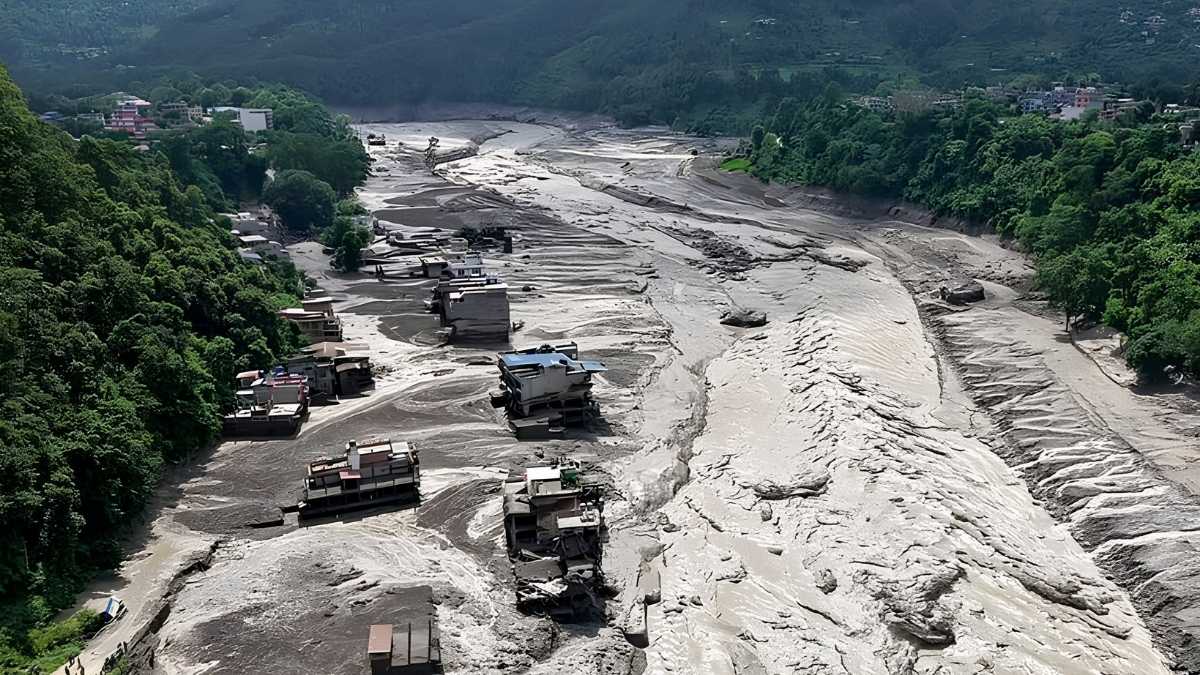
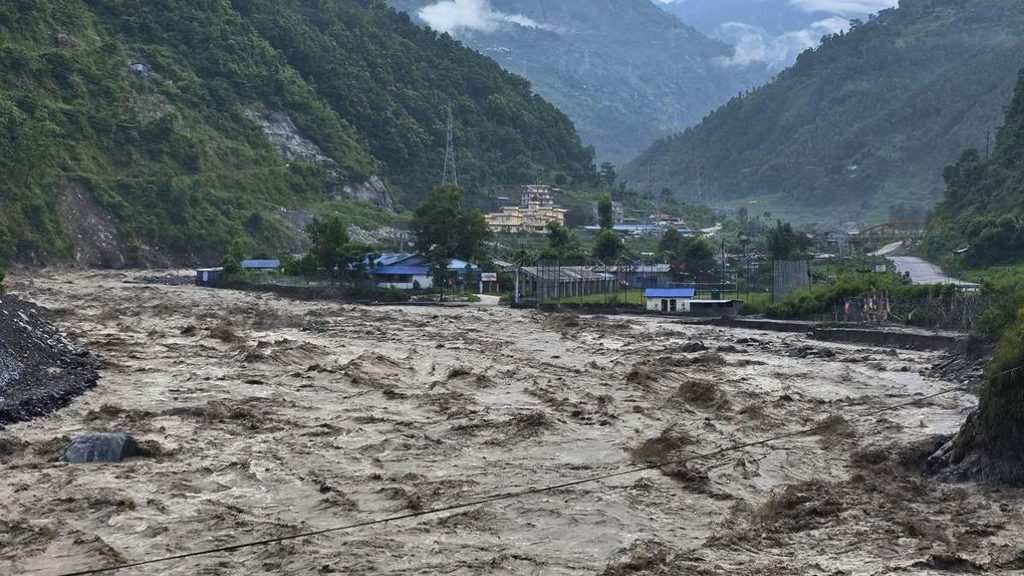
A catastrophic flash flood swept through the Nepal-China border region after a massive ice-rock collapse triggered a chain of events that sent water and debris downstream. Hundreds of people have been killed or remain missing, while roads, bridges, hydropower infrastructure and settlements have suffered extensive damage. Rescue operations were still underway on August 27.
Scientists and disaster experts are now examining how the event happened and whether climate change contributed to the conditions that made the mountain collapse possible.
It is important to be precise: climate change has not been established as the sole cause of the Rasuwa disaster.
But the broader scientific evidence is clear that Nepal’s Himalayan environment is changing rapidly.
And that raises an uncomfortable question:
Is Nepal becoming more vulnerable to disasters like Rasuwa as the climate warms?
What Happened in Rasuwa?
The Rasuwa disaster unfolded suddenly on August 26.
A huge mass of ice and rock collapsed in the high mountains near the Nepal-Tibet border. Preliminary assessments indicate that the collapse entered the Lhende Khola river system and helped create a temporary blockage before a powerful surge of water and debris moved downstream.
The event was initially surrounded by uncertainty because seismic signals were detected around the time of the disaster.
However, subsequent satellite analysis and expert assessment increasingly pointed toward a glacier or ice-rock collapse, rather than a conventional earthquake being the main cause.
The resulting flood travelled rapidly through the mountain valleys, destroying infrastructure and affecting communities in both the border region and downstream Nepal.
By August 27, Nepal Police had reported more than 350 deaths and hundreds of people still missing, although the numbers were continuing to change as rescue teams searched affected areas.
The disaster demonstrates why mountain hazards can be so dangerous: a collapse high in the Himalayas can become a major flood emergency downstream within a very short period.
What Does Climate Change Have to Do With the Rasuwa Flood?
This is where the story becomes more complicated.
It would be misleading to say:
“Climate change caused the Rasuwa flood.”
Scientists have not established such a simple cause-and-effect relationship.
The immediate trigger appears to have involved a large ice-rock collapse and subsequent flooding.
However, experts increasingly argue that climate change can increase the likelihood of some high-mountain hazards by changing the physical conditions of glaciers, snow, permafrost and mountain slopes.
Warmer temperatures can accelerate glacier melt.
They can change the amount and timing of snowfall.
They can alter freeze-thaw cycles.
They can contribute to permafrost thawing.
And these changes can affect the stability of mountain slopes and ice formations.
That means climate change can act as a risk multiplier rather than a single direct trigger.
In other words, a warming climate may help create conditions in which a geological or glacial event becomes more likely or more destructive.https://www.icimod.org/press-release/major-flash-flood-sweeps-through-nepals-rasuwa-district-raising-fears-of-further-downstream-flooding
Climate Change in Nepal Is Changing the Himalayas
Nepal is particularly vulnerable because much of the country depends on the Himalayan environment for water, agriculture, energy and tourism.
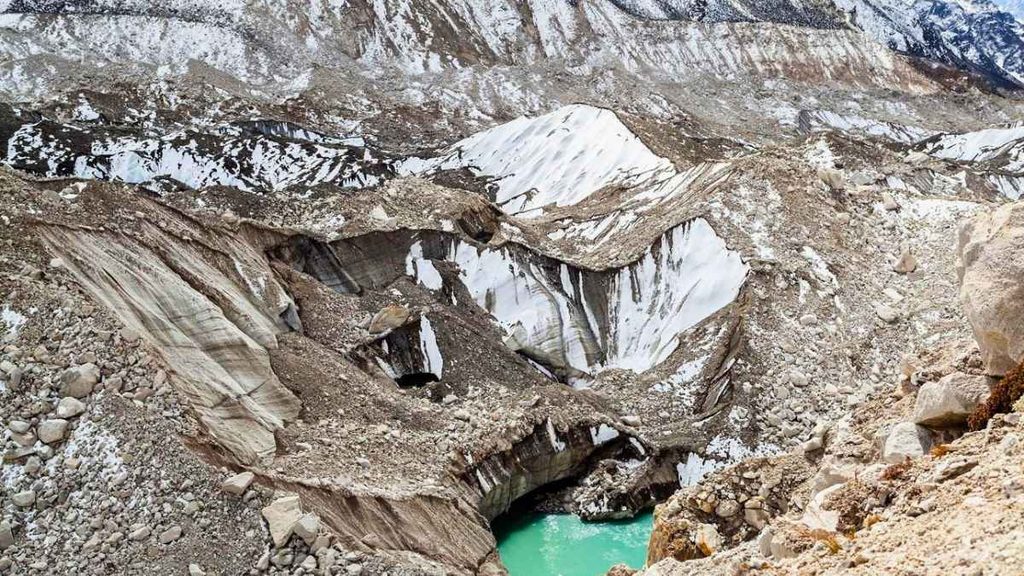
The Hindu Kush Himalaya contains enormous amounts of snow and ice, but those frozen reserves are changing rapidly.
According to ICIMOD’s Hindu Kush Himalaya Glacier Outlook 2026, glacier ice loss across the region has accelerated significantly, with glacier wastage occurring at roughly twice the rate after 2000 compared with the previous decades.
That is a major concern.
Glaciers are not just beautiful mountain features.
They influence river flows, water availability, ecosystems and downstream communities.
As glaciers shrink, the risks can change in different ways over time.
Some areas may initially experience increased meltwater.
Later, as glaciers become smaller, dry-season water availability can become more uncertain.
At the same time, changing glaciers and high-altitude lakes can create new hazards.https://www.worldbank.org/en/brief/2022/08/28/key-highlights-country-climate-and-development-report-for-nepal
Why Glacier Melt Can Increase Flood Risk
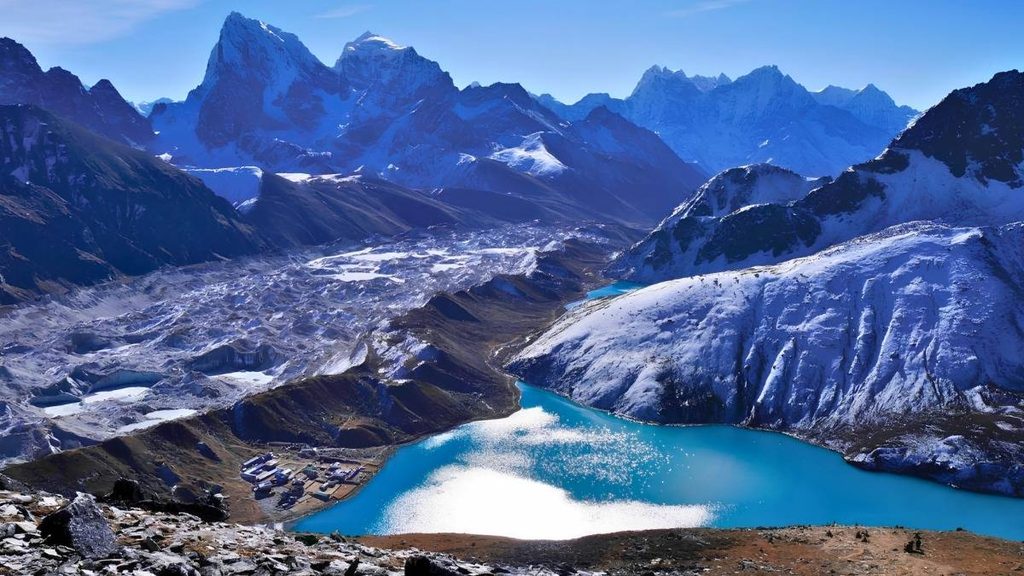
One of the most widely discussed climate-related hazards in the Himalayas is the Glacial Lake Outburst Flood, commonly called a GLOF.
A GLOF occurs when water stored in a glacial lake is suddenly released.
The release can happen because of an ice avalanche, landslide, unstable natural dam or another triggering event.
A large volume of water can then move rapidly downstream, carrying rocks and sediment with it.
Nepal has experienced GLOFs before, and ICIMOD has warned that changing glaciers and glacial lakes are creating continuing risks for downstream communities.
However, the Rasuwa event should not automatically be labelled a GLOF.
Current evidence points toward an ice-rock avalanche and cascading flood process, while scientists continue to investigate the precise sequence of events.
That distinction is important for understanding climate change in Nepal accurately.
Not every Himalayan flood is a GLOF.
But many different hazards can be influenced by changes in the cryosphere.
Nepal’s Climate Risk Goes Beyond Glaciers
Climate change in Nepal is not only a mountain problem.
The country is exposed to multiple climate-related hazards, including:
- Floods
- Landslides
- Extreme rainfall
- Drought
- Heatwaves
- Glacier-related hazards
- Glacial lake outburst floods
- Water shortages
- Agricultural disruption
- Forest fires
These risks can also interact.
For example, heavy rainfall can saturate a mountain slope.
A landslide can block a river.
A temporary natural dam can form.
The dam can later fail.
The result can be a sudden flood much larger than the original rainfall event.
This is why scientists increasingly talk about compound and cascading disasters.
The Rasuwa disaster is an important example of how several physical processes can interact in a short period.
Is Nepal Becoming More Vulnerable to Floods?
Nepal has always experienced floods.
Flooding is a natural part of the country’s river systems.
But climate change can alter the characteristics of extreme events.
Changes in rainfall intensity can increase the potential for sudden flooding in some areas.
At high elevations, warming can alter snow and ice conditions.
Glacier retreat can create or enlarge lakes.
Permafrost changes can affect mountain stability.
The result is a more complicated risk environment.
Climate change does not mean that every year will have more floods than the previous year.
Instead, it means the country must prepare for a changing range of possible extremes.
Historical weather records alone may no longer be enough to determine how much risk a road, bridge, hydropower plant or settlement faces.
Could Nepal Face Another Rasuwa-Scale Disaster?
Yes, another major disaster is possible.
But that does not mean another Rasuwa-scale flood is imminent.
There is currently no scientific method capable of predicting the exact date, location or size of the next glacier collapse, landslide or extreme flood.
What scientists can identify is vulnerability.
Nepal has steep mountains, unstable slopes, major rivers, glaciers and communities living downstream from high-altitude terrain.
The country also has extensive infrastructure concentrated along river valleys.
That combination creates significant exposure.
Climate change adds another layer of uncertainty because the physical environment itself is changing.
The sensible conclusion is therefore not that another Rasuwa flood is guaranteed.
It is that Nepal needs to be better prepared for sudden and potentially cascading Himalayan disasters.
Why Early-Warning Systems Matter
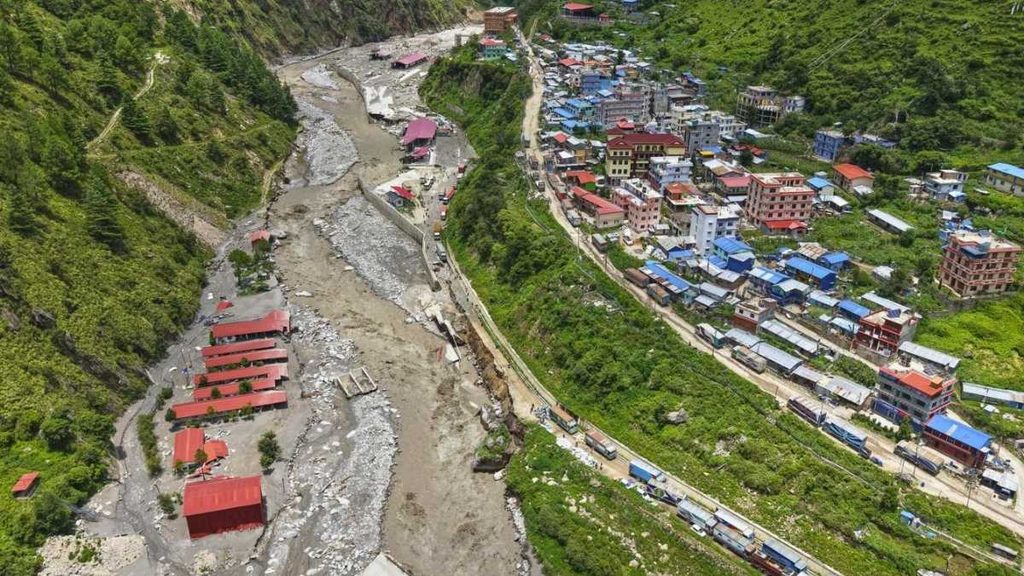
One of the biggest challenges revealed by Rasuwa is the speed at which a mountain disaster can develop.
A warning system is valuable only if it provides enough time for people to move to safety.
For communities close to the source of an avalanche or collapse, the available warning time may be extremely limited.
That means Nepal needs monitoring systems operating at multiple levels.
These could include:
- Satellite observation
- Glacier monitoring
- High-altitude cameras
- River-level sensors
- Weather stations
- Automated alarms
- Mobile-phone warnings
- Community sirens
- Emergency communication networks
Monitoring should also continue after an initial disaster.
A landslide can create a temporary natural dam.
A lake can form behind it.
If that dam fails later, a second flood can occur.
That is why disaster response must consider secondary hazards, not simply the first event.
Nepal Needs Better Cross-Border Disaster Cooperation
The Rasuwa disaster also demonstrates something unique about Himalayan hazards.
The source of a disaster may be located across the border, while the communities most severely affected can be downstream in Nepal.
The Bhote Koshi and related river systems connect areas across the Nepal-China border.
That means disaster preparedness cannot stop at the international boundary.
Nepal needs rapid access to information about:
- Glacier collapses
- Landslides
- River blockages
- Dangerous lakes
- Extreme rainfall
- Avalanche activity
- Sudden changes in river levels
Better cross-border data sharing could provide crucial additional warning time.
For a fast-moving flood, even a few minutes can matter.
Hydropower Faces Growing Climate Risk
Nepal’s hydropower sector is another major reason why climate change matters.
The country’s rivers provide enormous potential for electricity generation, and hydropower is central to Nepal’s economic development.
But many hydropower projects are located in mountain valleys.
Those same valleys can carry:
- Floodwater
- Landslides
- Rockfall
- Sediment
- Debris flows
- Glacier-related surges
The Rasuwa disaster damaged infrastructure and demonstrated how quickly a mountain event can affect transportation and energy systems.
Future hydropower development therefore needs to consider not only normal river conditions but also extreme and cascading hazards.
What Should Nepal Do About Climate Change?
Nepal cannot stop global warming by itself.
Its contribution to global greenhouse-gas emissions is relatively small compared with major industrial economies.
But Nepal can reduce its vulnerability.
Improve climate and mountain monitoring.
The government and scientific institutions need more data from high-altitude areas.
Expand early-warning systems
Warnings should reach people through mobile phones, sirens, radio and local emergency networks.
Map high-risk communities
People need to know whether their homes, schools and businesses lie in potential flood or landslide pathways.
Build climate-resilient infrastructure
Roads, bridges, hydropower projects and settlements need to be designed using future rather than only historical risk.
Strengthen cross-border cooperation
Nepal needs rapid information sharing with neighbouring countries when hazards develop upstream.
Educate communities
People should know what an emergency warning means and where they should evacuate.
Increase climate adaptation investment.
Nepal needs long-term investment in resilient infrastructure, agriculture, water management and disaster preparedness.
What Does the Rasuwa Disaster Tell Us About Nepal’s Future?
Perhaps the biggest lesson is that climate change in Nepal should not be viewed as a distant future problem.
The country’s climate and mountain systems are already changing.
The glaciers are losing ice.
High-altitude lakes are changing.
Extreme weather can interact with fragile terrain.
And millions of people live downstream from mountains where relatively small changes can have enormous consequences.
But it is equally important not to turn every disaster into a climate-change headline without evidence.
Good climate reporting requires a distinction between what is known, what is suspected and what remains under investigation.
The Rasuwa disaster provides a perfect example.
We know that a catastrophic mountain collapse and flash flood occurred.
We know that the Himalayan cryosphere is warming and losing ice rapidly.
We know that climate change can alter glacier, snow, permafrost and slope conditions.
What scientists are still determining is exactly how those long-term changes contributed to the specific collapse that triggered the Rasuwa disaster.Rasuwa Flood 2026: Latest Death Toll, Missing People, Damage and Rescue Updates
Is Nepal Prepared for the Next Major Disaster?
Nepal has made progress in disaster preparedness, but Rasuwa shows that significant gaps remain.
The country’s geography makes complete protection impossible.
There will always be hazards that occur too quickly or in locations that are difficult to monitor.
The goal, therefore, should not be to promise that disasters can be prevented.
The goal should be to reduce exposure, improve warnings, strengthen infrastructure and save lives.
That requires cooperation between government agencies, scientists, local governments, communities and neighbouring countries.
It also requires accepting that climate change is changing the baseline conditions in which Nepal manages natural hazards.
Climate Change in Nepal: The Bigger Picture
The Rasuwa flood should be understood as part of a much bigger climate story.
Nepal sits at the heart of the Hindu Kush Himalaya, one of the world’s most important mountain and water systems.
The region’s glaciers are changing rapidly.
ICIMOD’s 2026 assessment found that glacier mass loss has accelerated substantially since 2000. The organisation warns that these changes are already affecting river flows and increasing risks associated with hazards such as GLOFs.
That means Nepal faces a complicated future.
In some places, the immediate concern may be flooding.
In others, it could be landslides, drought, water shortages or agricultural disruption.
For mountain communities, several risks may occur together.
Climate change is therefore not one disaster.
It is a risk multiplier affecting many parts of Nepal’s environment and economy.
Conclusion
The devastating Rasuwa flood of August 2026 has forced Nepal to confront the reality of its changing Himalayan environment.
The disaster cannot simply be described as a flood caused by climate change.
The immediate trigger appears to have involved a massive ice-rock collapse and a cascading release of water and debris, while scientists continue investigating the exact mechanisms.
But the broader climate evidence is increasingly difficult to ignore.
Nepal’s glaciers are losing ice at accelerating rates. Mountain temperatures are rising. Snow, permafrost and high-altitude lakes are changing. These transformations can influence the stability of the Himalayan environment and the hazards faced by people living downstream.
The question for Nepal is therefore not simply:
“Will another Rasuwa flood happen?”
It is:
“Will Nepal be better prepared when the next major Himalayan disaster happens?”
That is where climate policy, disaster preparedness, scientific monitoring and infrastructure planning must come together.
Nepal cannot control how quickly the planet warms.
But it can decide how prepared its people, communities and infrastructure will be for the risks that warming creates.
Frequently Asked Questions
What is climate change in Nepal?
Climate change in Nepal refers to long-term changes in temperature, precipitation, glaciers, snow, extreme weather and other environmental conditions affecting the country. Nepal’s Himalayan geography makes it particularly sensitive to changes in the cryosphere.
Did climate change cause the Rasuwa flood?
Scientists have not established that climate change alone caused the Rasuwa flood. The disaster appears to have been triggered by a major ice-rock collapse and subsequent flooding. However, experts say warming can destabilize glaciers, rock and mountain slopes and increase the risk of certain catastrophic events.
Why is climate change dangerous for Nepal?
Climate change can affect Nepal through glacier loss, changing rainfall, floods, landslides, heat, drought, water insecurity and glacier-related hazards. These risks can also interact and create cascading disasters.
Are Nepal’s glaciers melting faster?
Yes. ICIMOD’s 2026 Glacier Outlook reports that glacier wastage across the Hindu Kush Himalaya has accelerated, with melting rates roughly doubling after 2000 compared with the previous period.
Could Nepal experience another major glacier-related flood?
Yes. Nepal remains exposed to glacier collapses, GLOFs, landslides and other mountain hazards. However, nobody can accurately predict the timing or location of the next major event.
What is a GLOF?
A Glacial Lake Outburst Flood (GLOF) occurs when water stored in or around a glacial lake is suddenly released, potentially sending a destructive flood downstream.
What can Nepal do to reduce climate-related disaster risk?
Nepal can strengthen glacier and river monitoring, expand early-warning systems, improve evacuation planning, build more resilient infrastructure, map high-risk areas and strengthen cross-border disaster cooperation.
Final Takeaway
Climate change in Nepal is no longer just a question for future generations.
The changing Himalayas are already creating new challenges for water resources, infrastructure, agriculture and disaster management.
The Rasuwa tragedy does not prove that climate change caused one specific flood.
It does, however, demonstrate why Nepal needs to take the changing Himalayan environment seriously.
The next disaster may not look like Rasuwa.
It may be a landslide, a GLOF, an extreme rainfall event, a river flood or a combination of several hazards.
Nepal cannot predict every disaster.Has Balen Shah Changed After Coming to Power?
But it can prepare for a future in which climate change makes Himalayan risks more complex, interconnected and difficult to manage.