
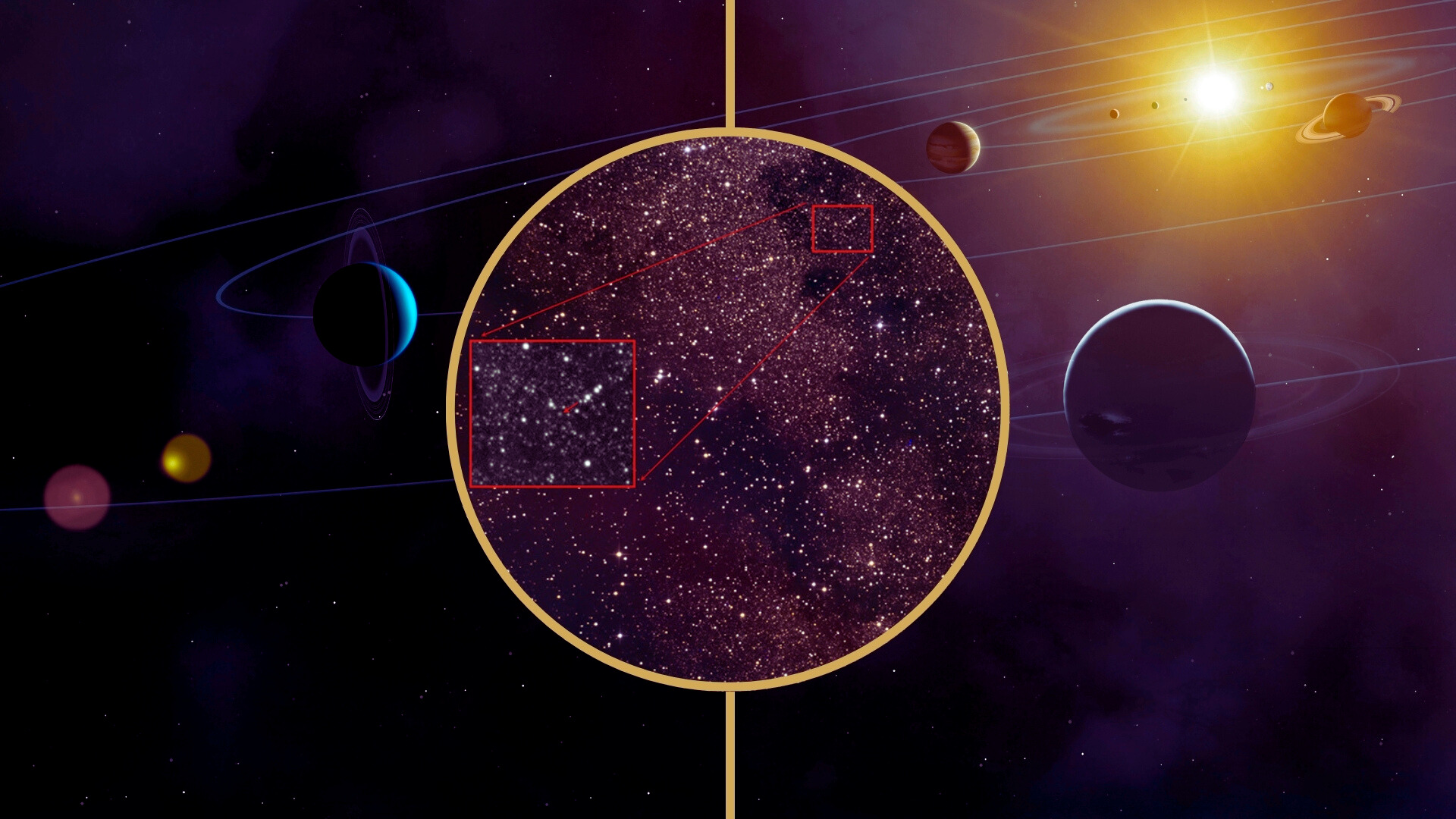
The cosmos never ceases to amaze, and in 2025, it delivered another enigma: 3I/ATLAS, the third confirmed interstellar object to zip through our solar system. Discovered by the ATLAS telescope network, this cosmic traveler has ignited curiosity and speculation, with many wondering about the 3I ATLAS space mystery. Is it a natural comet from a distant star, or could it be something more extraordinary, like an alien craft? Let’s unravel the facts, explore its journey, and dive into why this object captivates astronomers and dreamers alike.
A Stellar Speedster: The Discovery
On July 1, 2025, the Asteroid Terrestrial-impact Last Alert System (ATLAS) spotted a faint object hurtling toward the Sun at an astonishing 137,000 miles per hour (61 km/s). Unlike typical asteroids or comets bound to our Sun, 3I/ATLAS follows a hyperbolic orbit with an eccentricity exceeding 6, confirming its interstellar origins—it’s not from around here! Early images from NASA’s TESS satellite, dating back to March 2025, revealed a puzzling fivefold brightness surge, adding fuel to the 3I ATLAS space mystery. Was this a natural outburst of gas and dust, or something stranger?
Originating from the direction of Sagittarius, near the Milky Way’s core, 3I/ATLAS stands apart from its predecessors, 1I/ʻOumuamua and 2I/Borisov, which came from the northern celestial hemisphere. It won’t come close to Earth (staying 1.8 AU, or 170 million miles, away) but is set for a close Mars flyby in October 2025, offering a prime chance for ESA’s Mars orbiters to study it.

What Makes 3I/ATLAS Unique?
This interstellar visitor looks like a comet, complete with a nucleus (estimated 1-10 km wide), a glowing coma, and a tail stretching several arcseconds. Observations from the Hubble Space Telescope (July 2025) revealed a teardrop-shaped dust cocoon, while the James Webb Space Telescope found an unusual composition: carbon dioxide (CO₂) ice dominates, outpacing water ice 8 to 1—a rarity compared to our solar system’s comets.
Here’s how 3I/ATLAS compares to past interstellar objects:
- Size and Activity: Larger and more active than ʻOumuamua’s inert, cigar-shaped form; similar to Borisov but with a more pronounced tail.
- Speed: A blistering 58 km/s excess velocity, the fastest interstellar object yet, perfect for sparking 3I ATLAS space mystery theories.
- Composition: High CO₂ suggests it formed in a colder, alien protoplanetary disk, possibly billions of years ago.
- Orbit: Its extreme hyperbolic path ensures a one-way trip through our system, exiting after its October 2025 perihelion (3.8 AU from the Sun).
The brightness flare observed by TESS has fueled speculation. Unlike typical cometary outbursts, this surge was unexpectedly intense, prompting questions about internal heat sources or exotic processes—though natural explanations remain the focus.
A Scientific Jackpot: Clues from Another Star
The 3I ATLAS space mysteryisn’t just about intrigue; it’s a scientific treasure. Its CO₂-rich makeup hints at a formation environment unlike our solar system’s, offering clues about planetary formation across the galaxy. Telescopes like Gemini South (August 2025) and SPHEREx have captured spectra showing dust similar to our comets but with an interstellar twist. The upcoming Mars flyby could yield detailed data via ESA’s Mars Express and Trace Gas Orbiter, analyzing ejected materials for a deeper look at its origins.
With the Vera C. Rubin Observatory now online, astronomers expect to spot more interstellar objects—perhaps 1-2 per year—making 3I/ATLAS a cornerstone for future studies. Its data helps refine models of how volatile ices and dust behave in distant star systems.
The Alien Angle: Could It Be a Craft?
The 3I ATLAS space mysterykeyword thrives because space sparks our imagination. Its high speed, galactic-center origin, and that odd brightness spike evoke sci-fi dreams of an alien probe or derelict ship. Forums buzz with theories, drawing parallels to ʻOumuamua, which some (like Avi Loeb) speculated might be artificial due to its unusual shape and motion.
However, science points to natural origins. No radio signals or unnatural maneuvers have been detected—just the behavior of a comet reacting to solar heat. The brightness surge likely stems from volatile ices sublimating, a common cometary trait. Still, the 3I ATLAS space mystery keeps the “what if” alive, reminding us how little we know about the universe’s vastness.
Conclusion: A Fleeting Cosmic Guest
As of September 14, 2025, 3I/ATLAS races toward its solar exit, a fleeting visitor from another star. The 3I ATLAS space mystery—whether a natural comet or something more—captures our sense of wonder. It’ll be visible again in December 2025 post-perihelion before vanishing forever. Follow NASA, ATLAS, or ESA for updates, especially around the Mars flyby. What’s your take on this cosmic enigma? Share below!
2 thoughts on “3I ATLAS Space Mystery: Interstellar Comet or Alien Visitor?”