
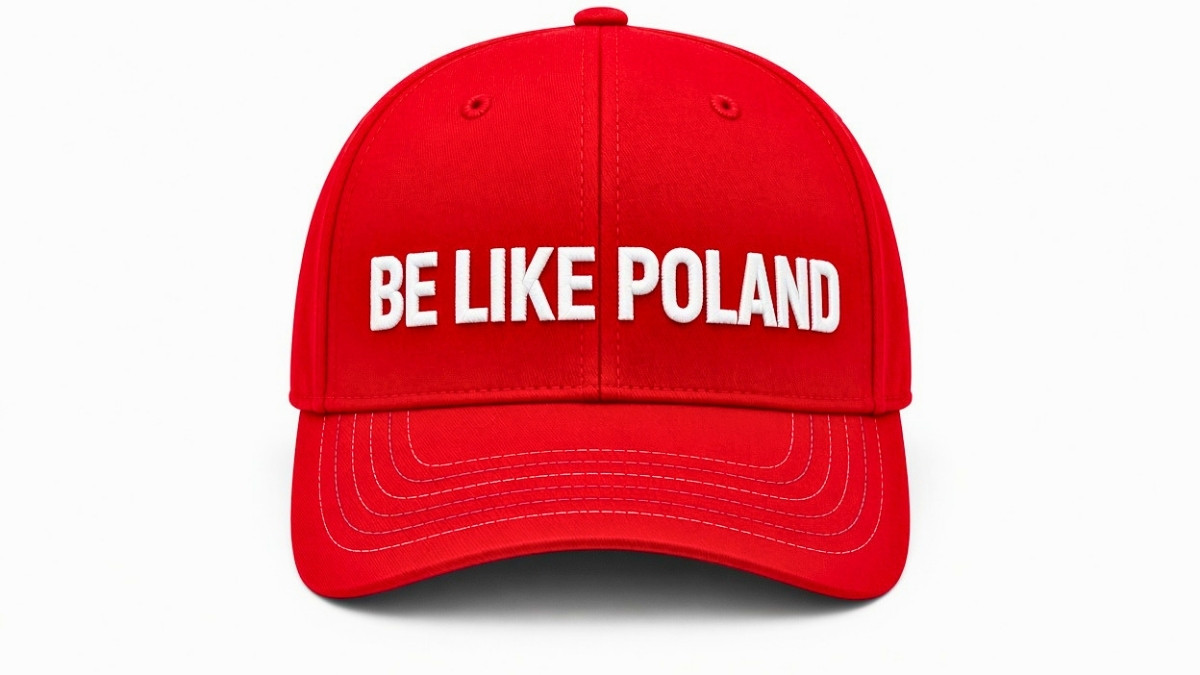
The phrase “Be Like Poland” is gaining international attention as Polish politician Dominik Tarczyński uses viral social media videos to present Poland as a model for border security, immigration control and public safety. His recent clips comparing the quiet streets of Polish cities with the unrest in France have helped bring the slogan back into the spotlight.
The campaign has attracted attention from audiences outside Poland, particularly people following debates about immigration and national identity in Europe. It has also sparked disagreement over whether Poland’s policies offer a model other countries should follow.
But what does “Be Like Poland” actually mean, who is behind the campaign, and why is it trending now?
What Does “Be Like Poland” Mean?
“Be Like Poland” is a political slogan promoted by Dominik Tarczyński, a Polish member of the European Parliament. It encourages other countries to look at Poland as an example of national sovereignty, strict border controls and a tougher approach to irregular migration.
Tarczyński presents Poland as a country that has avoided some of the security problems he associates with migration policies in Western Europe. His message is that governments should be more confident in protecting their borders and deciding who can enter their countries.
The slogan is also a personal political brand. Tarczyński promotes “Be Like Poland” through social media, interviews, clothing and other merchandise. Its short, memorable wording and visual branding have helped it travel beyond traditional political audiences.
Supporters see the message as a call for stronger borders and national security. Critics question the campaign’s generalizations about migrants and the suggestion that immigration alone explains differences in public safety between European countries.
Who Is Dominik Tarczyński?

Dominik Tarczyński is a Polish conservative politician and member of the European Parliament associated with the Law and Justice party, abbreviated as PiS.
He has become increasingly visible in international political discussions about immigration, European identity and border security. Rather than limiting his message to speeches and parliamentary debates, he frequently uses short videos and interviews to communicate directly with online audiences.
His official website promotes the “Be Like Poland” message alongside clothing, accessories, interviews and opportunities to visit Poland.
This approach gives the campaign two connected elements: a political argument about how countries should manage immigration and security, and a recognizable brand that followers can share online.
Why Is “Be Like Poland” Trending in October 2026?
The recent attention is linked to a series of videos in which Tarczyński contrasts scenes from Poland with events elsewhere in Europe.

1. Viral videos comparing Poland and France
One of the campaign’s most widely discussed videos showed Warsaw at approximately 1:35 a.m., with Tarczyński contrasting the scene with unrest in France. He subsequently filmed in Kraków, continuing the comparison.
A report published on October 19, 2026, said one of his recent Instagram videos had attracted nearly 10 million views. The footage helped bring the slogan back into international discussions.
The format is simple: show a scene from a Polish city, contrast it with footage of unrest elsewhere, and present Poland’s approach as an alternative. The comparison is visually effective, but a short video cannot establish the overall safety of two countries or explain every cause of unrest.
2. Immigration and border security remain contentious issues
Immigration continues to be a major political issue across Europe. Governments face debates over irregular border crossings, asylum applications, integration, deportations and the responsibilities of European countries.
Tarczyński uses these concerns to argue that other governments should adopt policies similar to those he supports in Poland.
The Polish government has also pursued restrictive measures at its border with Belarus. In May 2026, Poland’s Ministry of the Interior and Administration announced another extension of restrictions on the right to apply for international protection at that border.
The policy is controversial. Supporters argue that it helps protect the border against irregular migration and pressure linked to Belarus. Humanitarian organizations and refugee-rights advocates have raised concerns about access to asylum and the treatment of people seeking protection.
These disagreements form part of the wider context behind the slogan.
3. The slogan resembles familiar political branding
“Be Like Poland” has similarities to the short, repeatable political messaging associated with Donald Trump’s “Make America Great Again” campaign.
Both slogans frame a country as a model that supporters believe should be protected or restored. Tarczyński’s branding also uses merchandise and social media to build recognition beyond conventional political communication.
The similarity does not mean the campaigns are identical. It helps explain why the Polish slogan may be familiar to international audiences who follow conservative politics in the United States and Europe.
4. Social media makes the message easy to share
Short political videos are easy to repost, discuss and translate across platforms. A viewer does not need to understand Polish politics in detail to understand the central message of a clip comparing two cities.
The slogan also invites a direct response. People may agree with the argument, challenge it, or share it to criticize the politician. All three reactions can extend a video’s reach.
However, high view counts do not necessarily demonstrate public agreement. They measure attention, not whether viewers accept the claims being made.
Is Poland Safer Than Other European Countries?
This question is central to the campaign, but it requires more than a comparison between a quiet street and footage of a disturbance.
Public safety can be measured in several ways, including homicide rates, reported assaults, robbery, victimization surveys and people’s perceptions of safety. Different measures can produce different comparisons, and reporting practices vary between countries.
A video recorded at night may show that a particular location was quiet at that moment. It cannot establish that the entire country has lower crime rates or that one immigration policy caused the difference.
Poland’s crime patterns, social conditions, demographics, policing practices and migration policies all deserve examination using comparable data. The same applies to France and other European countries.
Tarczyński argues that restrictive immigration policies have helped protect Poland. That is his political interpretation. Establishing a causal relationship between immigration and crime requires broader evidence that accounts for other relevant factors.
Readers should therefore distinguish between what a video shows, what the politician claims it proves, and what independently collected data can establish.
What Is Poland’s Immigration Policy?
Poland has taken a restrictive approach to irregular migration at its border with Belarus, where the government has raised concerns about border security and pressure involving Belarusian authorities.
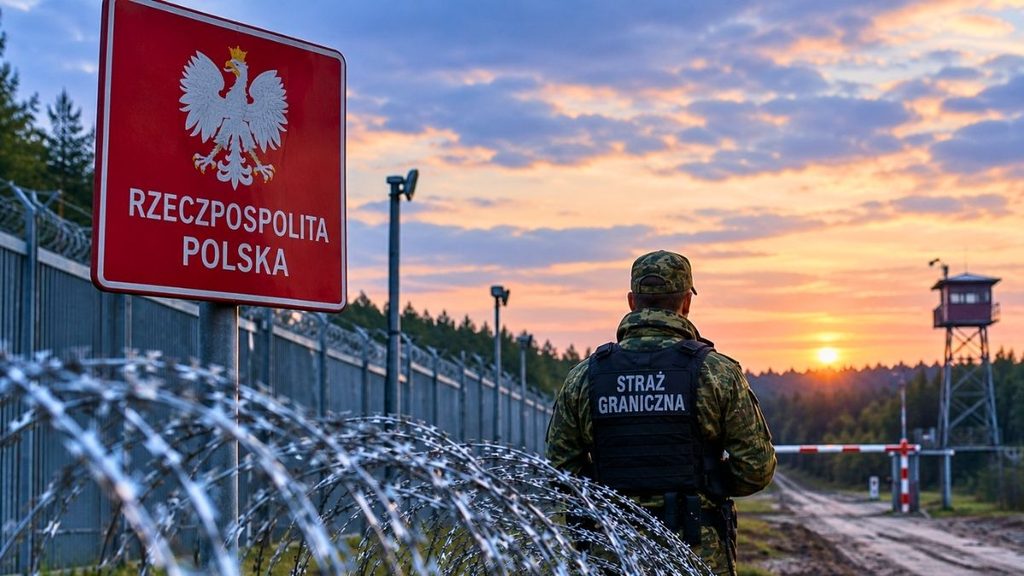
The government has defended temporary restrictions on access to asylum at that border as a security measure. The restrictions have also drawn criticism from organizations concerned about international protection obligations and the rights of people seeking asylum.
It is important to distinguish these specific border measures from Poland’s entire immigration system. Poland also receives foreign workers, international students, refugees and people entering through legal migration routes.
The country’s policies have changed over time and vary according to the circumstances and legal status of people entering or living in Poland.
Consequently, “Be Like Poland” is not a complete description of the country’s immigration system. It is a political slogan that emphasizes particular policies and presents them as an example for other countries.
Why Do Supporters and Critics Disagree?
Supporters of the campaign generally emphasize national sovereignty, border enforcement and the government’s responsibility to protect residents. They argue that states should be able to control irregular migration and enforce their laws.
Critics question the campaign’s portrayal of migration as the principal explanation for security problems in other European countries. They also argue that strict border policies must be assessed against legal obligations to protect refugees and provide access to asylum.
There is another important distinction: a country’s overall security record cannot be reduced to one policy. Crime, social integration, economic conditions, policing, demographics and local circumstances can all influence public safety.
A meaningful comparison between Poland and other countries must consider those factors rather than relying solely on political messaging.
Could Other Countries Follow Poland’s Approach?
Some governments may consider individual elements of Poland’s border policy, while others may reject them or pursue different approaches.
Whether a policy can be transferred successfully depends on each country’s geography, laws, international obligations, migration patterns and administrative capacity.
Poland’s border with Belarus presents particular security and geopolitical circumstances. Those conditions are not identical to the challenges faced by France, Germany, the United Kingdom or other European countries.
Governments can learn from one another, but evaluating a policy requires evidence about its results, costs, legal implications and humanitarian consequences.
For that reason, “Be Like Poland” is best understood as a political argument inviting debate, rather than a ready-made solution that will necessarily work everywhere.
Conclusion
“Be Like Poland” is trending in October 2026 because Dominik Tarczyński has used viral videos, international media appearances and recognizable branding to bring his message about immigration and public safety to a wider audience.
The slogan has gained attention during an ongoing European debate over border security, asylum and national sovereignty. Its appeal comes partly from its simplicity: it presents Poland as an example other countries should consider.
Yet the central claims deserve careful examination. Viral videos can draw attention to political issues, but they cannot independently prove why countries experience different levels of crime or unrest.
Understanding the trend means looking beyond the slogan to the policies, evidence and competing arguments behind it.
The continuing debate over “Be Like Poland” reflects a larger question facing Europe: how can governments protect public safety, manage migration and meet their legal obligations while responding to public concerns?
As the slogan spreads, those questions are likely to remain part of the wider conversation about Europe’s future.