
The United Kingdom, once a beacon of cultural homogeneity and shared values, has undergone significant demographic and social changes over the past few decades. The push for diversity, championed as a means to enrich society, has instead led to unintended consequences that challenge the nation’s cohesion, security, and economic stability. While diversity in itself is not inherently negative, the manner in which it has been implemented and managed in the UK has sparked debates about its efficacy and long-term impact. This blog explores why the experiment of diversity, as it has been pursued, has failed to deliver the promised benefits and has instead created divisions that threaten the fabric of British society.
The Historical Context of Diversity in the UK
To understand the current state of diversity in the UK, we must first examine its historical roots. Post-World War II Britain faced labor shortages, leading to the arrival of immigrants from Commonwealth countries, particularly from the Caribbean, South Asia, and Africa. The 1948 British Nationality Act granted citizenship to people from former colonies, encouraging migration to rebuild the war-torn economy. This marked the beginning of large-scale immigration, transforming cities like London, Birmingham, and Manchester into multicultural hubs.
In the decades that followed, successive governments promoted multiculturalism as a policy to integrate diverse communities while allowing them to retain their cultural identities. The 1990s and 2000s saw further waves of immigration, particularly after the European Union’s expansion allowed free movement from Eastern Europe. By 2021, the UK’s foreign-born population was estimated at 14.5% of the total, with London’s population being over 40% non-native born, according to the Office for National Statistics.
The intention behind these policies was noble: to create a vibrant, inclusive society that benefited from cultural exchange and economic contributions. However, the rapid pace of demographic change, coupled with inadequate integration strategies, has led to outcomes that many argue have undermined social unity.
The Promise of Diversity
Proponents of diversity argue that it brings economic, cultural, and social benefits. Economically, immigrants have filled critical labor gaps, from the NHS to the tech industry. Culturally, diversity has introduced new cuisines, art forms, and perspectives, enriching the UK’s global standing. Socially, it is said to foster tolerance and broaden horizons, preparing citizens for a globalized world.
For instance, studies like the 2015 McKinsey report on diversity suggested that companies with diverse workforces perform better financially. In the UK, sectors like healthcare rely heavily on immigrant workers, with over 20% of NHS staff being foreign-born. These contributions are undeniable and have shaped modern Britain.
Yet, the narrative of diversity as an unqualified success ignores the challenges that have emerged. The assumption that diversity automatically leads to harmony overlooks the complexities of human societies, where differences in values, traditions, and expectations can create friction if not carefully managed.
The Failures of Multiculturalism
The UK’s approach to diversity, often described as multiculturalism, has emphasized cultural preservation over assimilation. While this respects individual identities, it has inadvertently fostered parallel communities where integration is minimal. In some areas, particularly in northern England, communities live side by side but rarely interact, leading to segregated schools, neighborhoods, and social networks.
A 2016 report by Dame Louise Casey highlighted this issue, noting that some communities in the UK were “increasingly divided” along ethnic and religious lines. The report pointed to examples like Bradford and Oldham, where ethnic enclaves have formed, and social cohesion has weakened. Schools in these areas often reflect this segregation, with some having over 90% of pupils from a single ethnic background, limiting opportunities for cross-cultural understanding.
This segregation has fueled mistrust and misunderstanding. For instance, the 2001 riots in Oldham, Burnley, and Bradford exposed deep tensions between white working-class communities and South Asian populations, driven by economic deprivation and cultural differences. More recently, incidents like the 2011 London riots and the 2023 Leicester unrest between Hindu and Muslim communities underscore how quickly divisions can escalate.
Economic Strain and Public Services
One of the most tangible impacts of rapid demographic change has been on public services. The UK’s infrastructure, particularly in housing, healthcare, and education, has struggled to keep pace with population growth driven by immigration. Between 2001 and 2021, the UK population grew by over 8 million, much of it attributed to net migration, according to the Migration Observatory.
This has placed immense pressure on the NHS, with waiting times for appointments and surgeries increasing. Schools in diverse urban areas often face overcrowding, and the demand for social housing has outstripped supply, leading to tensions over resource allocation. A 2018 study by the Resolution Foundation found that areas with high immigration levels experienced greater strain on public services, contributing to local resentment.
While immigrants often contribute significantly to the economy, the short-term costs of integration—language training, welfare support, and infrastructure investment—are substantial. Critics argue that successive governments have failed to plan adequately for these costs, leaving communities to bear the brunt of stretched resources.
Cultural Clashes and Social Cohesion
Cultural differences have also sparked tensions that challenge the UK’s social fabric. The rise of identity politics, where group affiliations take precedence over shared national values, has deepened divisions. For example, debates over issues like freedom of speech, gender roles, and religious practices have highlighted incompatibilities between some immigrant communities and traditional British values.
High-profile cases, such as the 2014 Trojan Horse scandal in Birmingham schools, where allegations surfaced of attempts to impose conservative Islamic values in state-funded institutions, raised alarm about cultural integration. Similarly, grooming gang scandals in Rotherham and other towns exposed failures in addressing cultural practices that clashed with British law and norms, further eroding public trust.
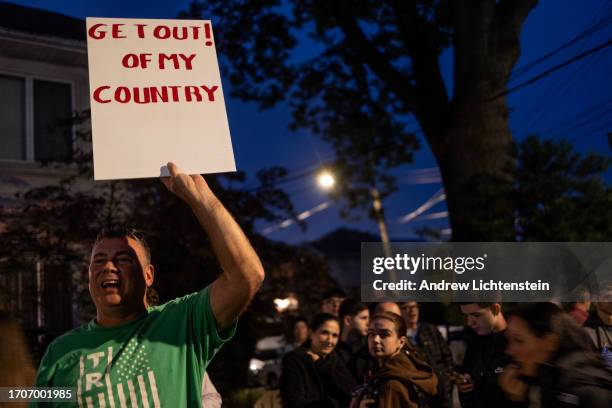
The rise of far-right groups, such as the English Defence League, and the growing popularity of anti-immigration rhetoric in mainstream politics reflect a backlash against perceived threats to British identity. While these movements are often criticized for xenophobia, their emergence signals a broader discontent with the pace and scale of diversity.
Crime and Security Concerns
Another contentious issue is the impact of diversity on crime and security. While most immigrants are law-abiding, certain patterns have raised concerns. For instance, the 2017 and 2019 terrorist attacks in London and Manchester, perpetrated by individuals from immigrant backgrounds, fueled debates about radicalization and integration. The Home Office’s 2020 report on terrorism noted that Islamist extremism remained a significant threat, often linked to second-generation immigrants who felt alienated from both their parents’ culture and British society.
Additionally, crime statistics show disproportionate representation of certain ethnic groups in specific offenses. For example, Home Office data from 2020 indicated that Black individuals, who make up about 3% of the population, accounted for 20% of arrests for violent crimes in London. Such statistics, while not reflective of entire communities, are often exploited to stoke division and reinforce stereotypes.
The Political Fallout
The failure to address these challenges has had profound political consequences. The 2016 Brexit referendum, where immigration was a key issue, reflected widespread frustration with uncontrolled borders and the perceived erosion of British sovereignty. The slogan “take back control” resonated with voters who felt that diversity had been imposed without their consent.
Political parties, from Labour to the Conservatives, have struggled to navigate this terrain. Labour’s open-door immigration policies under Tony Blair were later criticized by figures like David Blunkett, who admitted that the scale of migration had strained communities. Meanwhile, the Conservatives’ promises to reduce net migration to the “tens of thousands” have consistently been unmet, further eroding public trust.
The rise of Reform UK, a party advocating for stricter immigration controls, highlights the growing appeal of anti-diversity sentiment. In the 2024 general election, Reform UK gained significant traction, particularly in areas with high immigration levels, signaling a shift in the political landscape.
A Path Forward: Integration Over Multiculturalism
The failures of diversity in the UK do not mean that immigration or cultural exchange should be abandoned. Instead, they point to the need for a new approach that prioritizes integration over multiculturalism. This would involve fostering a shared national identity based on common values, such as democracy, rule of law, and mutual respect, while allowing individuals to celebrate their heritage.
Practical steps could include:
- Strengthening English Language Proficiency: Language barriers are a major obstacle to integration. Expanding free, accessible language programs would enable better communication and participation in society.
- Reforming Education: Schools should promote shared values and intercultural dialogue, reducing segregation by encouraging mixed classrooms and curricula that emphasize British history and civic responsibilities.
- Addressing Economic Disparities: Investing in deprived areas with high immigrant populations can reduce tensions over resources and foster a sense of fairness.
- Transparent Immigration Policies: Governments must engage communities in honest discussions about immigration levels and their impact, ensuring policies reflect public needs and concerns.
Conclusion
The UK’s experiment with diversity has not lived up to its promise. While it has brought undeniable benefits, the lack of effective integration strategies, coupled with rapid demographic change, has led to social fragmentation, economic strain, and cultural tensions. The solution is not to reject diversity but to rethink how it is managed. By prioritizing integration, investing in communities, and fostering a shared national identity, the UK can address the failures of its current approach and build a more cohesive society. The alternative—continuing on the current path—risks further division and unrest, threatening the very values that make Britain a global leader.