
A sudden wave of attacks on Jewish targets across Europe has raised serious questions. In just a few weeks, small incidents of arson and explosions have targeted synagogues, schools, and community services. One group has claimed responsibility for many of them. This is the story of a mysterious new name in the world of extremism.
The London Ambulance Attack
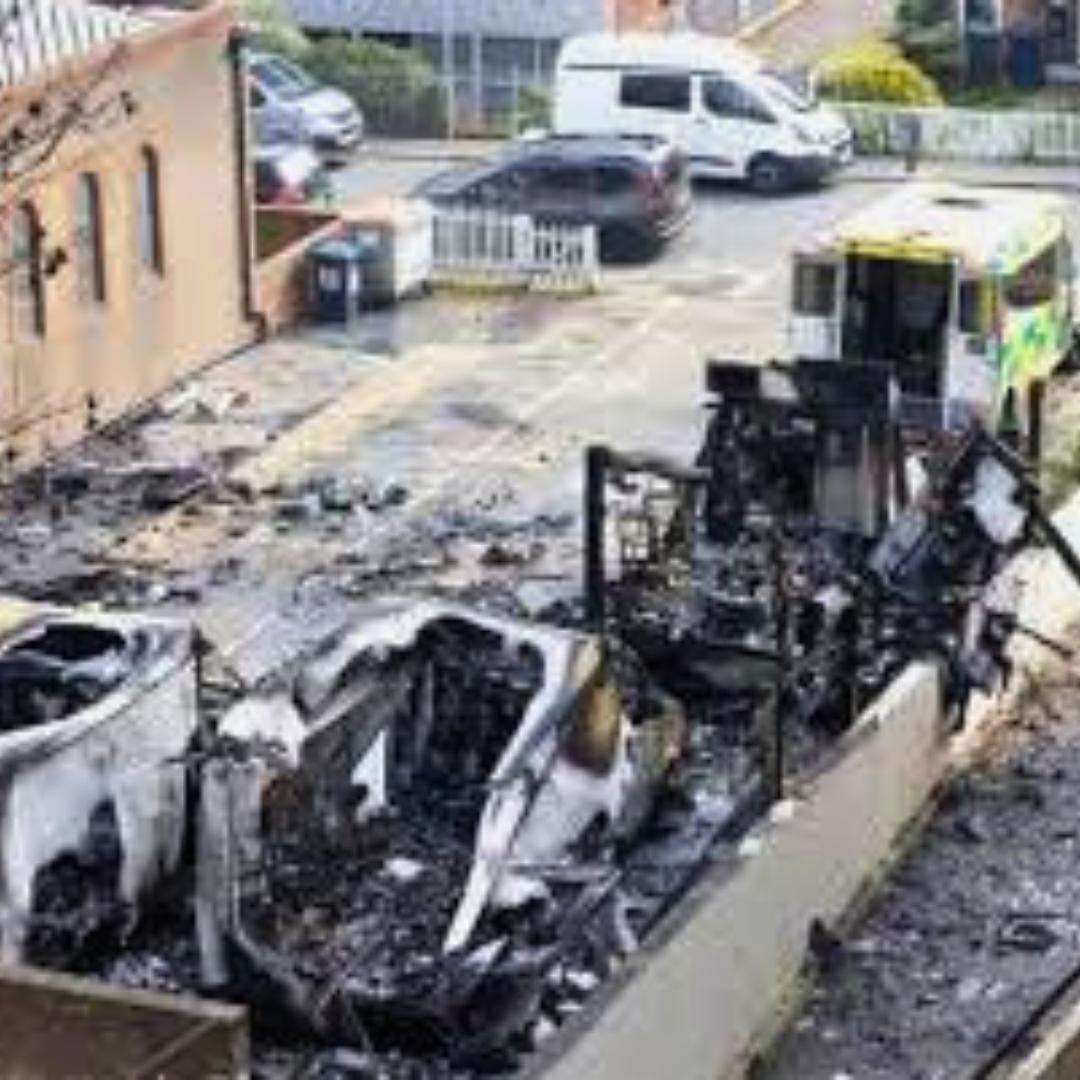
Early on 23 March 2026, four ambulances belonging to Hatzola Northwest were set on fire in Golders Green, north London. Hatzola is a volunteer organisation that provides free emergency medical help to people in the area, regardless of their background. The vehicles were parked near a synagogue in a neighbourhood with a large Jewish population.
The fire caused loud explosions because of gas cylinders on board. Flames lit up the street, broke windows in nearby flats, and woke residents. Thankfully, no one was hurt. Police arrived quickly, along with firefighters. CCTV footage showed three hooded people pouring liquid on one ambulance before running away.
Metropolitan Police are treating the incident as an antisemitic hate crime. Counter-terrorism officers are leading the investigation. Prime Minister Keir Starmer called it a horrific attack and said the government would help replace the damaged ambulances. The Chief Rabbi visited the scene to show support for the community.
A New Group Steps Forward
Hours after the London fire, a video appeared on Telegram. It showed a map of the exact location and footage of the burning ambulances. The message claimed responsibility and came from a group called Harakat Ashab al-Yamin al-Islamia, often shortened to HAYI. The name means roughly “Islamic Movement of the Companions of the Right” or “People of the Right Hand,” a phrase taken from the Quran that refers to righteous believers.
This was not the group’s first claim. It had already taken credit for similar incidents in other countries. Security experts immediately noticed something unusual: almost no one had heard of this group before March 2026.
Timeline of Claims
The group first appeared around 9 March. That same day, an explosion happened outside a synagogue in Liège, Belgium. No one was injured, but the blast caused some damage. Two days later, the group posted its first claim video.
Over the next two weeks, more incidents followed:
- 13 March: Arson attack on a synagogue in Rotterdam, Netherlands. Police arrested several young people in connection with related activity.
- 14 March: Explosion near a Jewish school in Amsterdam.
- 16 March: Another blast close to a commercial centre in Amsterdam.
- 23 March: The London ambulance fire, plus a car was torched in a Jewish area of Antwerp, Belgium.
Some other claims, such as an alleged attack in Greece, have not been confirmed by local police and may be false. All the real incidents caused property damage, but no deaths or serious injuries. The group spread its videos through pro-Iranian Telegram channels linked to Iraqi Shia militias.
What Makes This Group Different?
Most established terror organisations have a long history, public statements, and clear leaders. Harakat Ashab al-Yamin al-Islamia had none of that before March. There were no old videos, no website, and no mentions in intelligence databases.
Its logo looks similar to symbols used by Iranian-backed groups. Claims are always shared through existing networks connected to the “Axis of Resistance,” which includes militias supported by Iran’s Revolutionary Guards. Experts say this pattern suggests the group may have been created quickly for a specific purpose.
Police in the UK, Netherlands, and Belgium are working together to check if the claims are genuine. So far, they have not officially called the London attack terrorism, but they are treating the possibility of foreign links very seriously.
Possible Connections to Iran
Many analysts point to Iran as a likely influence. The timing is important. The attacks began shortly after the United States and Israel took military action against Iran at the end of February 2026. Iran has a long record of using proxy groups to strike targets far from its borders while keeping some distance.
Israeli officials have said openly that the group appears linked to Iranian networks. The way claims spread – through the same channels used by pro-Iran militias – adds to the suspicion. However, British security sources say it is still too early to be certain. They are investigating every angle, including whether local people were paid or encouraged to carry out the acts.
This style of operation fits a pattern called hybrid warfare: small, low-cost attacks that create fear and headlines without starting a bigger conflict. By using a new name, those behind it can try to avoid direct blame.
Impact on Jewish Communities
Jewish people across Europe already felt increased pressure after events in the Middle East. These attacks have made many feel less safe in their own neighbourhoods. In London, extra police patrols now watch synagogues and community centres. Similar steps have been taken in Belgium and the Netherlands.
Hatzola ambulances help everyone who needs medical help. Attacking them sends a message of hate against an entire community. Leaders from different faiths and political parties have condemned the violence and called for unity.
The lack of injuries so far is fortunate, but the fear is real. Families worry about sending children to school or attending evening prayers. Security experts warn that if the pattern continues or intensifies, the consequences could be much worse.
What Investigators Are Looking For
Counter-terrorism teams are focusing on several key questions:
- Who carried out the physical attacks on the ground?
- How did the group produce and spread its videos so quickly?
- Are there financial or command links to any foreign country?
- Could this be the start of a longer campaign?
Two men were arrested in connection with the London incident, but no further details have been released. Police say authenticating the group’s claim remains a top priority.Unite the Kingdom May 16 2026: A Rally for National Unity in London
Digital experts are tracing Telegram accounts and online traffic. They note that the group does not seem to have its own strong online presence. Instead, it relies on bigger, established channels to get attention.
Looking Ahead
As investigations continue, one thing is clear: a previously unknown name has suddenly appeared and claimed a series of attacks on Jewish targets in Europe. Whether Harakat Ashab al-Yamin al-Islamia is a real independent group or something created for another purpose, the incidents have already affected real lives and heightened tensions.www.telegraph.co.uk
European governments, intelligence agencies, and local police forces are sharing information more closely than ever. Jewish communities are staying alert while continuing their daily work of helping others.
The coming days and weeks will bring more answers. For now, the focus remains on keeping people safe, finding those responsible, and understanding the full story behind this new and shadowy development.