
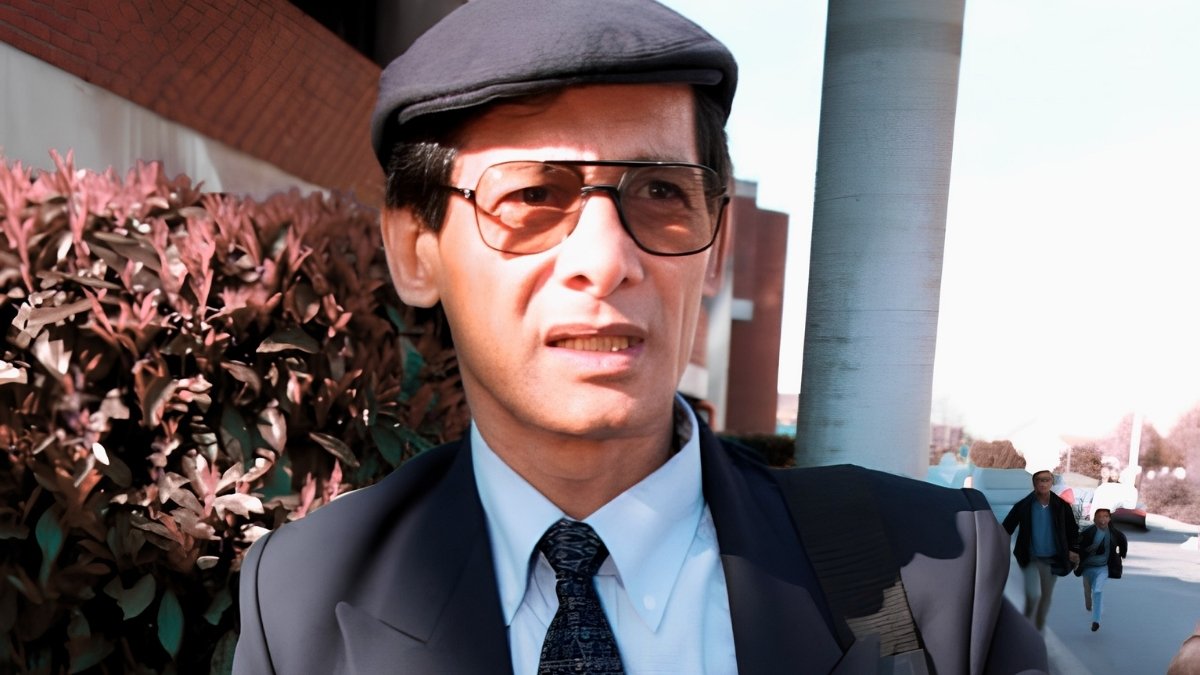
Charles Sobhraj, known by the nicknames “The Serpent” and “The Bikini Killer,” became one of the most notorious criminals associated with the 1970s “hippie trail” through South and Southeast Asia.
Born Hotchand Bhawnani Gurmukh Sobhraj on April 6, 1944, in Saigon, then part of French Indochina, Sobhraj grew into a French citizen of Indian and Vietnamese heritage. His criminal career involved fraud, theft, deception and a series of murders linked to Western travelers across Asia.
He was suspected of involvement in numerous killings, but the number of confirmed or legally established murders is considerably lower than the larger number sometimes attributed to him.
His story became internationally famous because of his ability to manipulate people, evade authorities and cross borders using stolen identities and passports.
His crimes later inspired books, documentaries and television productions, most notably the BBC and Netflix drama The Serpent.
Who Was Charles Sobhraj?
Charles Sobhraj was a French criminal who became notorious for targeting foreign travelers in Asia during the 1970s.
He frequently presented himself as a sophisticated and trustworthy figure, using charm and deception to gain the confidence of travelers. Investigators linked him to a series of robberies and killings across countries including Thailand, India and Nepal.

His victims were often young Western travelers following the so-called hippie trail, a popular overland travel route through parts of Asia during the 1960s and 1970s.
Sobhraj’s ability to move between countries, use false identities and exploit the limited communication between police forces helped him avoid arrest for years.
Why Was Charles Sobhraj Called “The Serpent”?
The nickname “The Serpent” came from his ability to repeatedly evade authorities and assume different identities.
He was known for using disguises, false passports and elaborate schemes. His ability to disappear and re-emerge in different places contributed to his reputation as a particularly elusive criminal.
The nickname later became internationally recognized through the 2021 BBC and Netflix drama series The Serpent, which dramatized his crimes and the international investigation surrounding him.
Why Was Charles Sobhraj Called the “Bikini Killer”?
The nickname “Bikini Killer” was associated with the clothing worn by some of the female victims whose deaths were linked to Sobhraj.
One of the best-known cases involved Teresa Knowlton, an American traveler whose body was discovered in Thailand. She had been wearing a bikini when she was found.
Other female victims were also discovered wearing swimsuits, contributing to the nickname that became associated with Sobhraj in media coverage.
The label should not be confused with a formal criminal designation. It was a media nickname used to describe the pattern associated with some of the killings.
Sobhraj’s Early Criminal Career
Sobhraj’s criminal activities began long before the murders that made him internationally notorious.
According to biographical accounts, he committed theft and fraud while still young and received a prison sentence in France for burglary in 1963.
His time in prison did not end his criminal career.
Instead, he became increasingly skilled at manipulating people and exploiting weaknesses in systems around him.
After his release, he became involved in increasingly sophisticated scams, theft and the use of fraudulent documents.
His ability to charm people became one of his most important tools.
The Hippie Trail and the Murders in Asia
During the 1970s, thousands of young Western travelers traveled through countries including India, Nepal, Thailand and other parts of Southeast Asia.
Sobhraj targeted people moving through this international backpacker network.
Investigators and later accounts described a pattern in which he gained the trust of travelers before allegedly drugging, robbing and, in some cases, killing them.
He was also known to steal passports from victims, allowing him to move between countries using other people’s identities.
Thailand became particularly important in the investigation into his crimes.
Several deaths were later connected to Sobhraj and people around him, although the exact number of victims attributed to him varies substantially between sources.
Who Were Sobhraj’s Associates?
Sobhraj did not always operate alone.
One of the most prominent people associated with him was Marie-Andrée Leclerc, a Canadian woman who became his partner and was involved in his criminal activities.
Another associate was Ajay Chowdhury, an Indian man who was linked to Sobhraj’s activities in Asia.
The exact role of individual associates differed from case to case, and claims about their involvement should be distinguished from convictions established in court.
This is particularly important when discussing unsolved deaths or allegations that were never tested through a criminal conviction.
The Nepal Murders

Nepal became one of the most important chapters in Sobhraj’s story.
In December 1975, American traveler Connie Jo Bronzich, 29, and Canadian traveler Laurent Carrière, 26, were murdered in Nepal.
Sobhraj was eventually convicted in Nepal for both killings.
The Bronzich case resulted in a life sentence, while the Bhaktapur District Court later convicted him in 2014 for the murder of Carrière.
These convictions are particularly significant because they are among the murders for which Sobhraj was actually found guilty by a court.
How Was Charles Sobhraj Arrested in India?
Sobhraj’s criminal career eventually caught up with him in New Delhi in 1976.
He was arrested after an attempt to drug a group of French students went wrong. Some of the students realized something was wrong and alerted authorities.
The arrest ended a period during which Sobhraj had managed to move across several countries while avoiding capture.
He subsequently spent many years in prison in India.
The Famous Tihar Jail Escape
Sobhraj became famous not only for his crimes but also for his escapes.
In 1986, while imprisoned in New Delhi’s Tihar Jail, he reportedly organized a fake birthday celebration and gave drug-laced sweets to prison guards.
The resulting confusion allowed him to escape.
His freedom did not last long.
He was recaptured in Goa and returned to prison.
The timing of the escape was also significant because Sobhraj was facing the possibility of extradition to Thailand, where he could have faced serious criminal charges related to the murders of Western travelers.
How Long Was Charles Sobhraj in Indian Prison?
Sobhraj spent roughly two decades in Indian prison before being released in 1997.
After his release, he returned to France.
Rather than disappearing completely from public attention, he became something of a media celebrity, giving interviews and discussing his extraordinary criminal history.
His ability to turn notoriety into publicity became another unusual chapter in his story.
Why Did Charles Sobhraj Return to Nepal?
In 2003, Sobhraj returned to Nepal.
That decision proved disastrous for him.
He was spotted in Kathmandu and arrested by Nepalese authorities.
His arrest was particularly significant because an outstanding investigation into the 1975 murders remained unresolved.
Sobhraj subsequently faced trial in Nepal.
Charles Sobhraj’s Conviction in Nepal
In 2004, a Kathmandu court convicted Sobhraj of murdering Connie Jo Bronzich.
He received a life sentence.
A decade later, in 2014, the Bhaktapur District Court convicted him for the murder of Laurent Carrière.
Sobhraj consistently denied responsibility for the killings and challenged the allegations against him.
When Was Charles Sobhraj Released From Prison?
On December 21, 2022, Nepal’s Supreme Court ordered Sobhraj’s release.
At the time, he was 78 years old and had served approximately 19 years in Nepal. The court’s decision took his age and the amount of his sentence already served into consideration.
The decision attracted international attention because of Sobhraj’s notoriety and the seriousness of the crimes for which he had been convicted.
When Did Charles Sobhraj Leave Nepal?
Sobhraj was released on December 23, 2022, and transferred through Nepal’s immigration system before being deported to France.
Nepal also imposed a 10-year ban on his return to the country.
His departure marked the end of nearly two decades in Nepalese custody.
Where Is Charles Sobhraj Now?
After his release from Nepal, Sobhraj was deported to France.
Because there has been limited reliable public reporting about his life since his return, it is better to avoid unsupported claims about his current residence, health or activities.
The important fact is that he was returned to France following his 2022 release from Nepal.
The Serpent: How His Story Became a TV Drama
Sobhraj’s life has been repeatedly adapted for television and film.
The most internationally successful recent portrayal was The Serpent, a BBC and Netflix drama released in 2021.
The series starred Tahar Rahim as Sobhraj and Jenna Coleman as Marie-Andrée Leclerc.
It focused heavily on the investigation into Sobhraj and his activities among Western travelers in Asia during the 1970s.
The popularity of the series introduced Sobhraj’s story to a new generation of viewers.
However, like any dramatization of real events, the series should not be treated as a complete historical record.
Black Warrant and Sobhraj’s Prison Story
Sobhraj’s story has also continued to appear in Indian popular culture.
The 2025 Netflix India series Black Warrant includes a depiction of Sobhraj’s time in Tihar Jail.
His prison escape has long been one of the most dramatic episodes of his criminal career, making it particularly suited to screen adaptations.
These productions have contributed to renewed interest in Sobhraj, but viewers should distinguish dramatized scenes from documented historical facts.
How Many People Did Charles Sobhraj Kill?
There is no single universally accepted number.
Sobhraj has been linked to numerous deaths across Asia, and some sources have attributed more than 20 killings to him.
However, being suspected or linked to a death is not the same as being convicted of that murder.
In Nepal, Sobhraj was convicted of the murders of Connie Jo Bronzich and Laurent Carrière.
For this reason, it is more accurate to say that Sobhraj was linked to or suspected in numerous killings while being convicted of specific murders, rather than simply stating that he killed a particular number of people as a fact.
Why Does Charles Sobhraj Remain Famous?
There are several reasons Sobhraj’s story continues to attract attention.
First, his crimes occurred during a period when international backpacking was expanding rapidly.
Second, he was unusually skilled at deception and identity manipulation.
Third, he repeatedly escaped or avoided authorities.
Fourth, his story involves several countries, making it an international criminal investigation rather than a single-country case.
Finally, books, documentaries and television dramas have kept his story alive.
His ability to transform from a wanted criminal into a media celebrity after his release from Indian prison added another unusual dimension to his public image.
The Legacy of Charles Sobhraj
Charles Sobhraj’s story is ultimately less about the glamorous image sometimes created by popular culture and more about the victims whose lives were destroyed.
The nickname “The Serpent” may sound dramatic, but behind the mythology were real travelers, families and criminal investigations spanning several countries.
His story also illustrates how international criminals could exploit gaps between national police forces before modern information-sharing systems became widespread.
The case remains particularly significant in Nepal because Sobhraj’s arrest, prosecution and imprisonment became one of the country’s most internationally recognized criminal cases.
Frequently Asked Questions
Who is Charles Sobhraj?
Charles Sobhraj is a French criminal who became notorious for fraud, theft and a series of killings linked to Western travelers in Asia during the 1970s.
Why is Charles Sobhraj called the Bikini Killer?
The nickname was associated with the swimsuits worn by some female victims whose deaths were linked to him.
Why is Charles Sobhraj called The Serpent?
The nickname refers to his ability to evade authorities, use false identities and repeatedly escape capture.
How many murders was Charles Sobhraj convicted of?
He was convicted in Nepal for the murders of Connie Jo Bronzich and Laurent Carrière.
When was Charles Sobhraj arrested in Nepal?
He was arrested in Kathmandu in 2003, after returning to Nepal.
When was Charles Sobhraj released from Nepal prison?
Nepal’s Supreme Court ordered his release on December 21, 2022, and he was released and deported on December 23.
Where did Charles Sobhraj go after leaving Nepal?
He was deported to France, his country of citizenship.
Is The Serpent based on a true story?
Yes. The BBC/Netflix series The Serpent is based on the real-life criminal career of Charles Sobhraj and the investigation surrounding him, although it dramatizes events for television.
Is Charles Sobhraj still alive?
Yes. He was released from Nepal in 2022 and deported to France.
Final Verdict
Charles Sobhraj remains one of the most notorious criminals associated with the 1970s Asian backpacker trail.The Thrills and Risks of Wild Mushroom Foraging: Lessons from California’s Recent Outbreak
His combination of deception, international travel, false identities, criminal associates and alleged involvement in multiple deaths made him a uniquely difficult target for investigators.
But the mythology surrounding “The Serpent” should not obscure the distinction between allegations, suspected killings and convictions. Where Is Nancy Guthrie? The Heartbreaking Mystery Unfolding in Tucson
His two Nepal murder convictions are firmly documented, and his 2022 release after 19 years in prison brought a remarkable chapter of Nepal’s criminal history to a close.
His story continues through documentaries, books, and fictionalized productions such as The Serpent and Black Warrant, ensuring that Charles Sobhraj remains a subject of fascination for true-crime audiences around the world.https://kathmandupost.com/
1 thought on “Charles Sobhraj: The “Bikini Killer” and “The Serpent” Explained”