

As a proud resident of Birgunj, I watch with deep sorrow as my vibrant city slowly emerges from the shadows of the recent Birgunj violence. This bustling trade hub on the Nepal-India border, known for its markets, customs points, and cross-border energy, has been brought to a standstill over the past three days by arson, stone-pelting, protests, and widespread fear. Shops remain shuttered longer than necessary, roads bear burn marks from tires set ablaze, and families hesitate to venture out even as curfew restrictions ease. The scars from this Birgunj violence run deep—not just physical, but emotional and communal—reminding us how fragile peace can be in our beloved Terai region.
Life is tentatively returning: vehicles move cautiously, essential services resume, and people whisper hopes for normalcy. Yet, the trauma persists. Businesses have suffered huge losses, children have missed days of school, and an undercurrent of distrust lingers in the air. What began as a social media spark has exposed deeper fissures, highlighting the growing challenges faced by the Hindu majority in an era marked by what many see as Nepal’s secularism failure.
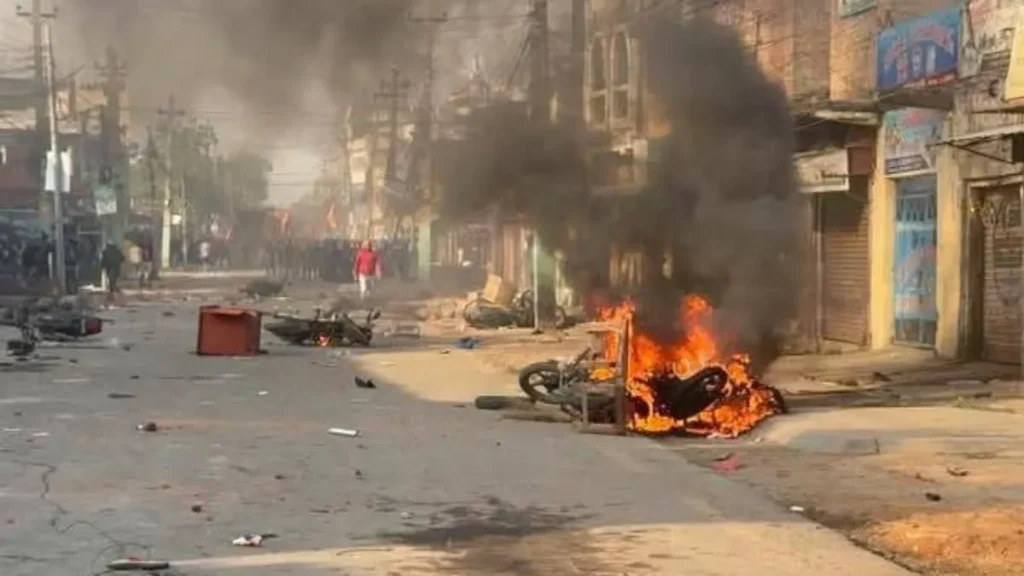
The Spark That Ignited the Birgunj Violence
The Birgunj violence traces back to a TikTok video posted by two young men from the Muslim community, containing content widely viewed as derogatory toward Hindu deities and religious sentiments. Such provocations on social media are unfortunately not rare, but in the sensitive Terai belt, they carry explosive potential. In reaction, a group of Hindu youths vandalized a mosque in nearby Dhanusha district, an act that, while condemnable, escalated the situation dramatically.
What followed was a rapid mobilization by radical elements within the Muslim community. Protests erupted in Birgunj, quickly turning chaotic with tire-burning, road blockades, stone-pelting at police, and vandalism of public property, including a local police post. For days, the city grappled with intense demonstrations, forcing authorities to impose and extend curfew orders multiple times. Security forces deployed heavily, using tear gas to disperse crowds, and the India-Nepal border saw tightened controls as tensions spilled over.
During these protests, provocative slogans were raised—reports and eyewitness accounts mention chants that directly targeted the Hindu majority, including variations like “Hinduu bhagao desh bachao” (Drive out Hindus, save the country). Hearing such words in our own soil, where Hindus constitute over 81% of the population, is not just sickening; it’s a direct assault on our identity and sense of belonging.
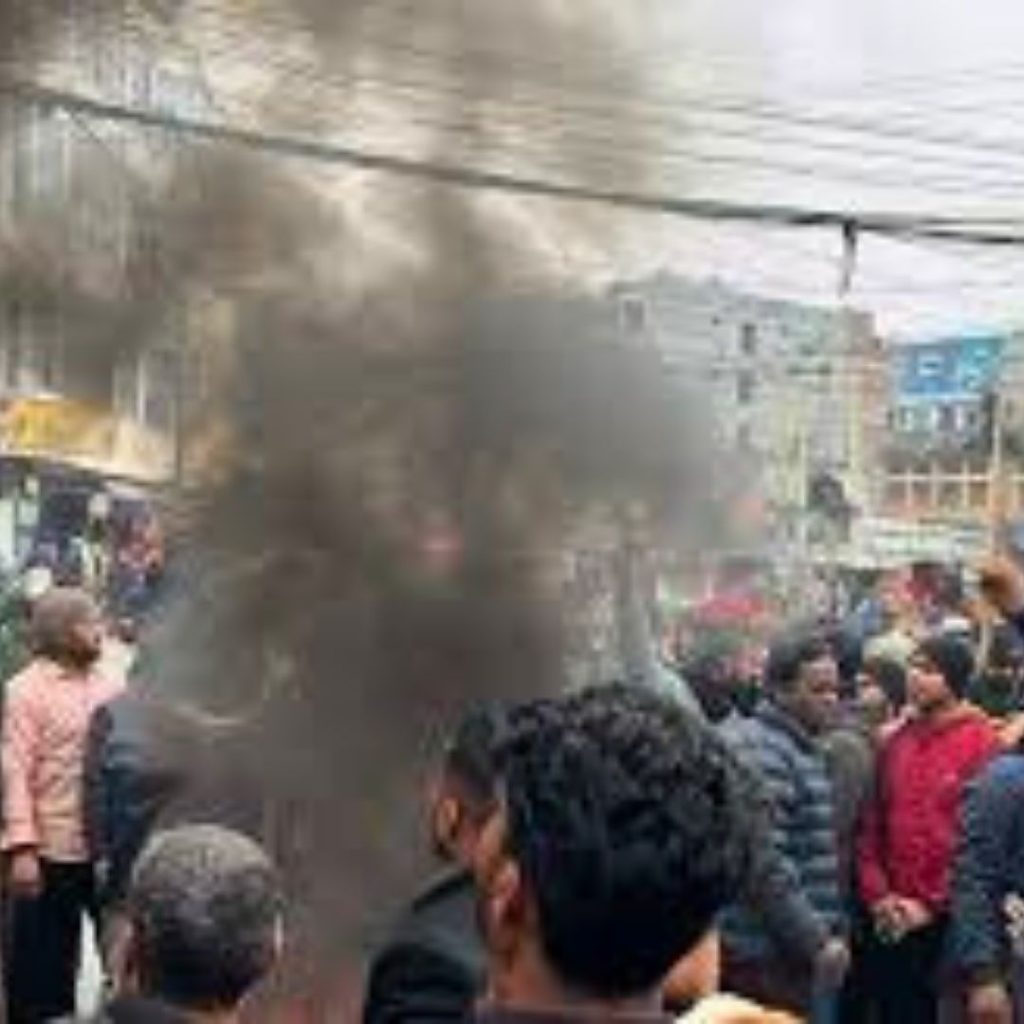
As a local, I’ve witnessed the fear firsthand: neighbors boarding up homes, shopkeepers guarding properties overnight, and communities on edge. Personal properties faced threats, and the scale of disruption felt targeted, amplifying concerns about intolerance toward the majority.
Rising Threats in the Terai and Nepal Secularism Failure
This Birgunj violence is not an anomaly; it’s part of a troubling pattern in Nepal’s Terai region, where the Muslim population is higher than the national average. Over recent years, we’ve seen repeated incidents: festivals interrupted, processions facing obstruction, social media hate targeting Hindu gods, and subtle demographic shifts that alter local dynamics. Hindus, despite being the vast majority nationally, increasingly feel vulnerable in these border areas.
Nepal was once the world’s only Hindu Rashtra, a status that embodied our ancient Sanatan Dharma’s tolerant yet proud ethos. The transition to secularism in 2008 was presented as modernization, but it has led to what many now recognize as Nepal’s secularism failure. Instead of equal protection for all, it has emboldened radical voices demanding one-sided concessions while showing little respect for majority sentiments. Provocative actions go unchecked longer, and responses from the majority are quickly labeled communal, creating an imbalance.
Just imagine the reverse: if Hindus were a minority in concentrated areas, facing regular mockery of deities, property threats, and aggressive mobilizations, would it not mirror the atrocities seen against Hindus in Bangladesh? Temple attacks, land encroachments, violence during festivals—those horrors could become routine here if current trends continue unchecked. The Birgunj violence brings this chilling possibility closer to reality, underscoring how Nepal’s secularism failure erodes protections for the Hindu majority.
The Imperative for Nepal Hindu Unity
Events like the Birgunj violence serve as a powerful wake-up call. For too long, Nepal’s Hindus have embodied tolerance, celebrating diversity and accommodating all faiths. We welcome mosques, churches, and gurudwaras; we participate in interfaith events. But when our gods are insulted, our properties threatened, and slogans call for our expulsion, passive tolerance becomes self-endangerment.
Now is the moment for Nepal Hindu unity. We must come together—peacefully, democratically, and assertively—to protect our heritage and rights. This means:
- Demanding swift, impartial action against hate speech and provocations, no matter the source.
- Ensuring equal sensitivity toward Hindu sentiments in law and society.
- Pushing for the restoration of Nepal as a Hindu nation, the sole guardian of this ancient identity globally.
- Advocating the return of the monarchy, a symbol of stability and Hindu unity before secular experiments dismantled it.
Pro-Hindu groups should organize awareness campaigns, educate youth on our glorious history, and hold leaders accountable. Political parties must prioritize majority concerns without fearing “secular” labels. Nepal Hindu unity does not mean exclusion; it means balancing rights so no community dominates or intimidates another.
Rebuilding Birgunj and Securing Nepal’s Hindu Future
As curfew lifts fully and markets reopen, Birgunj will heal outwardly. Trade will resume, borders will flow again, and daily life will regain rhythm. But true recovery demands addressing root causes. Community dialogues are essential, but they must include firm stands against radicalism. Authorities acted decisively this time, arresting provocateurs and maintaining order—such vigilance must become standard.
I worry deeply for my city’s future, for the safety of coming generations in a Nepal drifting from its Dharma roots. Yet, amid the pain of Birgunj violence, I see opportunity: a catalyst for awakening. If we achieve Nepal Hindu unity now, we can prevent worse escalations.Nepal Needs King in 2025: Healing a Divided Nation
Nepal’s essence is Hindu—tolerant, eternal, unifying. The failure of imposed secularism has exposed vulnerabilities; it’s time to reclaim our proud status. Restore the king as a symbol of harmony, revive the Hindu Rashtra to safeguard our legacy.
The wounds from Birgunj violence remind us: unlimited tolerance invites exploitation. Hindus of Nepal—unite for Dharma, for peace, for a secure tomorrow.www.hindustantimes.com
Jai Shri Ram. Jai Nepal.