

The Indian digital media landscape witnessed a significant shift when Saurabh Dwivedi announced his resignation from The Lallantop on January 5, 2026. After spending 12 years building the platform under the India Today Group, Dwivedi decided to step away, citing a desire for a study break and fresh creative pursuits. While official statements from both sides remained cordial, with the group thanking him for his contributions and appointing Kuldeep Mishra as the new editorial head, many observers see this departure as long overdue. For years, The Lallantop has been criticized for functioning more like a vehicle for Lallantop propaganda than genuine journalism, particularly through its consistent portrayal of Hindus and the BJP government in a negative light.
This exit comes at a time when public scrutiny of biased reporting has intensified. Platforms that selectively amplify certain narratives while downplaying others have increasingly faced backlash from an aware audience. Dwivedi’s departure offers an opportunity to reflect on the role such outlets play in shaping public opinion and whether they truly serve the interests of a united India.
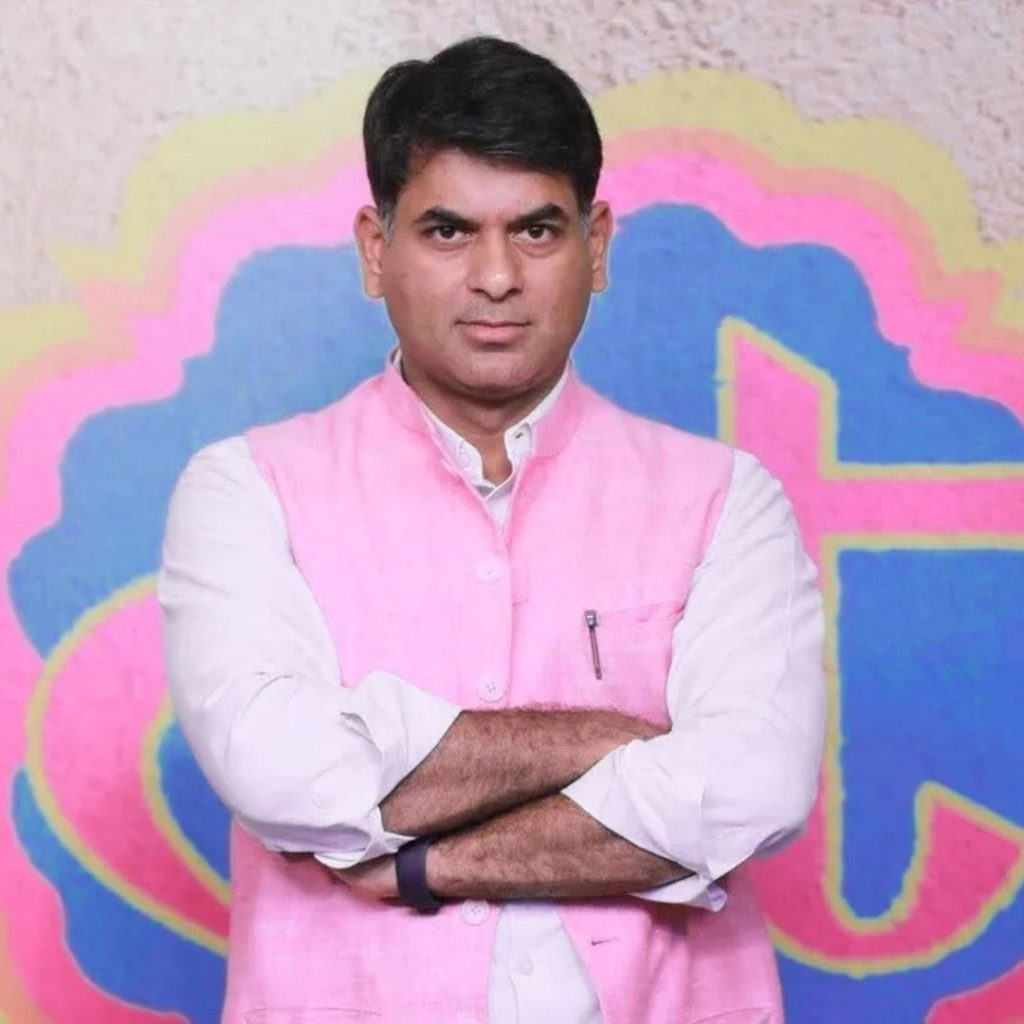
The Final Controversy: A Platform for Questionable Voices
One of the last major events associated with Dwivedi was a widely publicized discussion held in December 2025, billed as an intellectual exploration of the question “Does God Exist?” The event featured veteran lyricist Javed Akhtar, known for his atheistic views, debating Islamic scholar Mufti Shamail Nadwi. On the surface, it appeared to be an open-minded exchange between reason and faith. However, the choice of participants raised serious questions about intent.
Mufti Shamail Nadwi has a history of making statements that many find problematic, including expressions that appear to prioritize religious doctrine over national secular principles and reject the idea of a pluralistic society in favor of stricter interpretations of faith. Critics argue that by providing him with a high-profile stage and framing the event as a balanced debate, the platform effectively helped legitimize views that clash with India’s constitutional ethos. The pairing with Akhtar, a celebrity figure often critical of religious orthodoxy in general but selective in his targets, only added to the perception of an uneven playing field.
This event exemplified what detractors have long called Lallantop propaganda—a calculated effort to present contentious ideologies as mainstream thought while indirectly questioning traditional Hindu beliefs. Under the guise of promoting dialogue, such programs risk normalizing positions that could deepen societal divisions. In an era where media responsibility matters more than ever, giving undue prominence to voices with extremist leanings sends a dangerous message, especially to impressionable young viewers who form the core audience of digital Hindi content.
A Pattern of Selective Outrage and Distorted Reporting
The Lallantop rose to prominence by offering conversational, youth-oriented news in Hindi—a gap that needed filling in India’s media ecosystem. Long-form interviews, explainer videos, and live shows helped it amass millions of subscribers. However, beneath the engaging format lay a consistent pattern that fueled accusations of it being anti-Hindu media.
Time and again, stories involving communal tensions were presented with a clear slant. Incidents affecting the majority community often received minimal coverage or were framed in ways that downplayed the concerns of Hindu victims. Conversely, any issue that could be used to criticize the ruling BJP government—whether governance lapses, policy decisions, or cultural matters—was amplified with sensational headlines and prolonged discussions.
Interviews with BJP leaders, while occasionally conducted, frequently came across as confrontational, with questions designed to corner rather than clarify. Opposition figures, on the other hand, often enjoyed softer treatment. Past controversies involving Dwivedi himself, such as social media posts that appeared to mock supporters of the ruling party or traditional values, only reinforced the view that personal biases influenced editorial decisions.
This selective approach is a hallmark of what many describe as Lallantop propaganda. Rather than striving for neutrality, the platform seemed to prioritize narratives that aligned with a particular ideological viewpoint—one that consistently portrayed Hindutva, cultural revival efforts, and government initiatives in a negative light. Fake news or exaggerated claims targeting Hindus and the BJP circulated freely, often without adequate fact-checking or balanced rebuttals.
In a diverse nation like India, media outlets have a duty to foster understanding rather than division. When a popular platform repeatedly engages in one-sided reporting, it contributes to polarization and erodes public trust. The label of anti-Hindu media sticks because the pattern is too consistent to ignore: criticism flows freely toward the majority community and the elected government, while sensitivity is reserved for minority-related issues, even when those involve controversial figures.
The Broader Context of Media Responsibility
The rise of digital platforms has democratized information, but it has also amplified echo chambers. Outlets that claim to represent progressive or liberal values sometimes end up serving narrow agendas. The Lallantop, despite its massive reach, has been accused of being part of a larger ecosystem that systematically undermines national unity by promoting division along religious and political lines.
This is not to say that journalism should avoid criticism of those in power. Healthy democracy requires accountability. However, when scrutiny is disproportionately directed at one side—particularly the majority community and the government chosen by a significant portion of the electorate—it ceases to be journalism and becomes activism. Lallantop propaganda, as critics term it, manifests in subtle ways: the choice of stories, the framing of headlines, the guests invited, and the questions asked.
Over the years, several specific instances highlighted this bias. Coverage of festivals like Diwali or Holi often carried undertones questioning traditions, while similar scrutiny was rarely applied to other religious practices. Debates on the uniform civil code or temple reclamation issues were hosted with panelists overwhelmingly opposed to the majority viewpoint. Such patterns do not emerge by accident; they reflect editorial choices that prioritize ideology over objectivity.
Why the Timing of the Resignation Matters
Dwivedi’s exit follows closely on the heels of the controversial God debate and a series of shows that took sharp aim at BJP-ruled states. One of his final episodes reportedly delved into governance issues in Madhya Pradesh, alongside questions about institutional fairness in sports administration. The cumulative effect of these programs, combined with growing public criticism of the platform’s direction, may have created an unsustainable environment.
While no official link has been established between the content and the resignation, the timing invites speculation. In today’s media landscape, where audience sentiment can directly impact viability, platforms cannot ignore sustained backlash. Perhaps the India Today Group recognized the need for course correction, or perhaps Dwivedi himself sought a fresh start away from the controversies that shadowed his tenure.
Whatever the internal reasons, the departure represents a potential turning point. New leadership under Kuldeep Mishra offers a chance to reassess editorial priorities and move toward genuinely balanced reporting. If The Lallantop can shed the perception of being anti-Hindu media and reduce elements of Lallantop propaganda, it could reclaim credibility among a broader audience.
Looking Ahead: Hope for Better Journalism
Saurabh Dwivedi’s contributions to Hindi digital journalism cannot be entirely dismissed. He helped make news accessible and engaging for millions who previously felt disconnected from English-dominated media. Yet legacy is measured not just by reach but by responsibility. When a platform consistently alienates a large section of society through biased portrayal, its long-term influence suffers.Mufti Shamail Nadwi
As India progresses toward greater unity and development, the media must evolve accordingly. Outlets that peddle division—whether through overt propaganda or subtle bias—will find themselves increasingly marginalized by an informed public. The demand today is for journalism that reports facts without fear or favor, that critiques power regardless of political affiliation, and that respects the sentiments of all communities.
Dwivedi’s next chapter may involve independent ventures or creative projects. One hopes he reflects on the criticisms and uses his talent to build something more inclusive. Meanwhile, his exit from The Lallantop serves as a reminder: no platform is indispensable, and public trust, once lost, is hard to regain.Birgunj Market Crisis: India’s Trade Tariffs Devastate Nepal’s Border Markets
Ultimately, this development is cause for cautious optimism. It signals that accountability is possible, even in the fast-paced world of digital media. India deserves outlets that unite rather than divide, that inform rather than indoctrinate. The decline of Lallantop propaganda and the questioning of anti-Hindu media tropes mark a step in that direction.