
As someone living in Kathmandu, Nepal—a land celebrated for its interfaith harmony and sacred sites like Pashupatinath Temple—I have always believed in mutual respect among religions. Nepal’s culture promotes coexistence, where people of different faiths share spaces without conflict. Yet, recent events in India have shaken that belief and raised serious questions. Two shocking incidents in early January 2026—the alleged defecation inside the Ammavaru Temple in Hyderabad and the attempted offering of namaz at Ayodhya’s Ram Mandir—highlight a troubling trend. In both cases, the immediate response from certain quarters has been to label the perpetrators as “mentally unstable.” This excuse appears repeatedly when Hindu sacred spaces are targeted, prompting a critical question: why does this pattern seem so one-sided? Why do mentally ill people only target Hindu temples, and rarely, if ever, mosques or other religious sites in similar ways?
These are not isolated anomalies. They reflect a deeper issue that can no longer be dismissed with convenient explanations. Such acts of desecration hurt religious sentiments, erode trust between communities, and demand strict accountability rather than deflection.
The Disturbing Incident at Ammavaru Temple, Hyderabad
On January 10, 2026, in Malkajgiri, Hyderabad, a man was caught in the act of defecating inside the premises of the Ammavaru Temple, a revered Hindu site dedicated to the Goddess Mother. Viral videos quickly spread across social media platforms like Instagram and X, showing locals confronting the individual, forcing him to clean the area with a hose, and then handing him over to the police. The crowd’s anger was palpable, as temple grounds represent purity and devotion for millions of Hindus.
While police have detained the man and are investigating factors like possible alcohol influence or mental health concerns, social media accounts and eyewitness reports have widely identified him as a Muslim man. Protests followed swiftly, with demands for enhanced temple security and restrictions on non-Hindu vendors in the vicinity. The Hyderabad authorities have promised a thorough probe, but the incident has already fueled widespread outrage.
This wasn’t a mere hygiene lapse—it was a profound insult to Hindu sanctity. Temples are places of worship and spiritual refuge. To defile them in such a manner feels deliberate and provocative. Yet, as investigations continue, the familiar narrative of “mental instability” has begun to surface in some reports. If the act stemmed from genuine mental health issues, why select a temple specifically? Public spaces abound, yet these disruptions consistently occur at Hindu religious sites.
The Security Breach at Ayodhya Ram Mandir
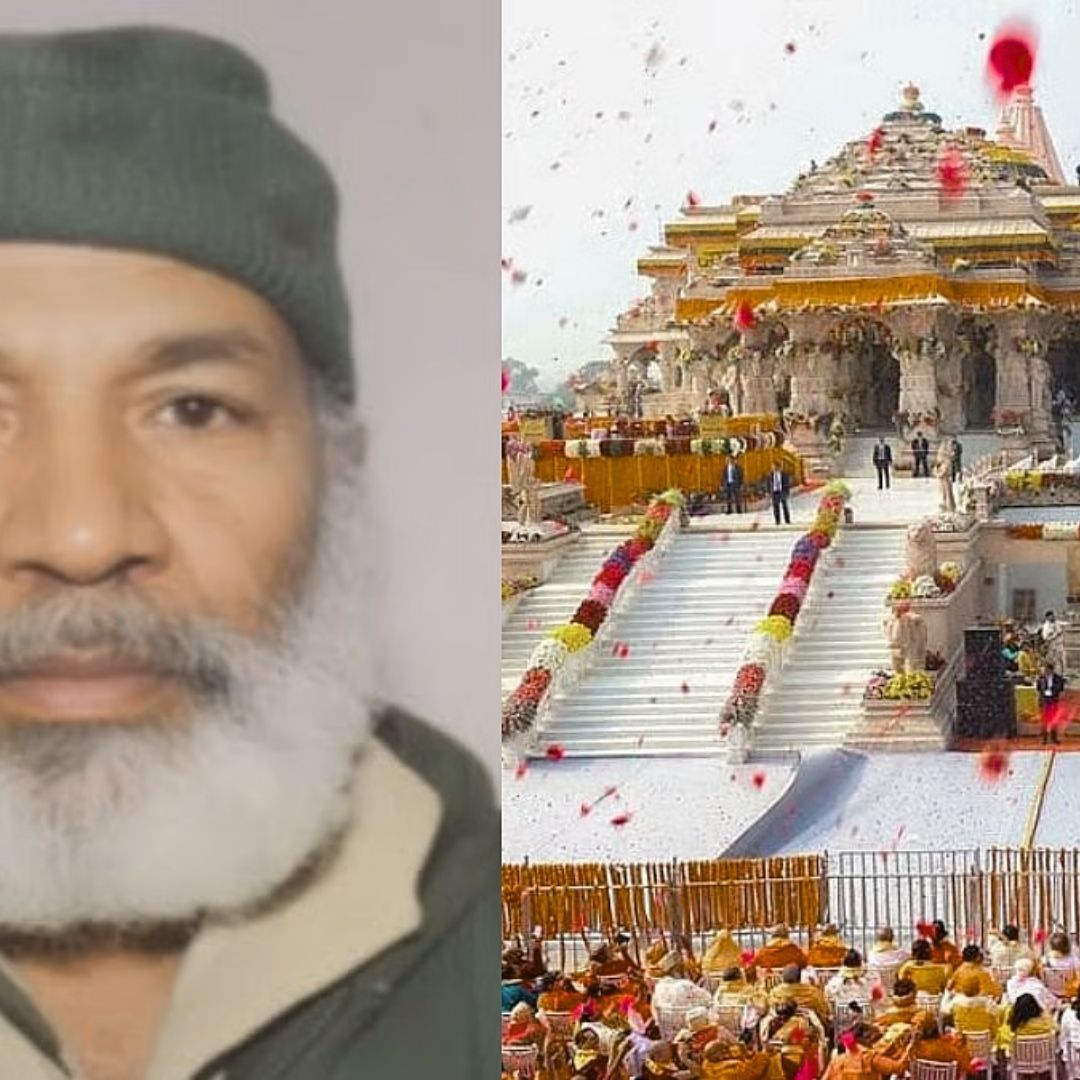
Just one day earlier, on the same date, another alarming event unfolded at the Ram Mandir in Ayodhya—a symbol of Hindu resilience and faith after decades of struggle. A 55-year-old man named Abdul Ahmad Sheikh (also reported as Ahmed Sheikh or Abu Ahmad Sheikh), from Shopian in Jammu and Kashmir, was detained after allegedly attempting to offer namaz near the Sita Rasoi area inside the temple complex.
Security personnel and devotees intervened when he reportedly began preparations for prayer and raised slogans including “Allahu Akbar” upon being stopped. Police and intelligence teams are questioning him about his travel history, entry method, and intentions. He had reportedly visited relatives in the area recently.
His family has publicly stated that he suffers from long-standing mental health issues, has been under treatment at a Srinagar hospital, and often wanders. Locals in Shopian support this claim, describing him as someone who frequents mosques but poses no intentional harm.
This explanation raises immediate doubts. A man travels hundreds of kilometers from Kashmir to Uttar Pradesh, enters a high-security site like the Ram Mandir, and attempts a religious act from another faith—yet it’s attributed solely to instability? The temple’s sanctity, recently restored in 2024, makes any breach especially sensitive. Hindu leaders have strongly condemned it, calling for rigorous action to prevent future violations.
The Persistent Pattern and the “Mentally ill” Narrative
What stands out most is the recurring use of the mental instability excuse in cases involving Hindu temples. Online discussions and reports from 2025 and early 2026 point to numerous similar incidents: idols vandalized, beef thrown into premises, urination or defecation in sacred areas—all too often followed by claims that the perpetrator was “mentally unwell” or under the influence.
This pattern prompts a logical question: if mental illness is truly random and non-discriminatory, why do these episodes disproportionately affect Hindu sites? Mental health challenges can lead to unpredictable behavior anywhere, but documented cases of unstable individuals targeting mosques in India or Pakistan are far rarer and often handled differently.
For instance, isolated reports exist—like a man in Sahiwal, Pakistan, in late 2025, booked for burning Quran pages and described as mentally unstable, or older cases of blasphemy accusations against unwell persons—but these are exceptions rather than a trend. In contrast, Hindu temples face repeated intrusions that are quickly downplayed with the same defense.
This one-sidedness suggests something more than coincidence. It feels like a convenient shield to avoid confronting potential religious animosity or deliberate provocation. The “victim card”—portraying the community as misunderstood or persecuted—has become an outdated tactic that deflects responsibility.
Observations from Pashupatinath Temple in Kathmandu
In my own city, Pashupatinath—one of Hinduism’s holiest shrines—has seen instances where Muslim individuals offer namaz in the outer premises. Social media often shares these moments as “heartwarming” examples of Nepal’s unity and diversity. Videos from recent years show prayer mats laid out peacefully near the temple, praised as symbols of harmony.
While Nepal’s secular ethos allows such openness (non-Hindus cannot enter the main sanctum, but the surroundings are accessible), these acts raise subtle questions. Why choose a Hindu sacred space for Islamic prayer when mosques exist nearby? It can feel like boundary-testing rather than pure devotion. If Hindus attempted similar rituals inside mosques, the response would likely be swift and firm.
This double standard highlights the imbalance: tolerance flows one way, while Hindu sites in India face outright disrespect followed by excuses.
Time for Zero Tolerance and Genuine Accountability
These incidents erode interfaith trust and heighten communal tensions. Governments must respond decisively: implement stricter temple security measures, restrict access to sensitive areas for non-devotees if necessary, and investigate motives rigorously without premature reliance on mental health claims.
Mental illness is a serious concern that deserves compassion and treatment—but it cannot serve as a blanket excuse for sacrilege. Communities should support affected individuals proactively rather than using their condition to minimize harm to others’ faith.
True harmony requires mutual respect, not one-sided encroachments or defilements. When sacred spaces are violated, the response must be firm, fair, and focused on justice.Honor Killings in Europe: The Crime That Refuses to Stay Behind
Final Thoughts: Calling for Real Change
The question of why mentally ill people only target Hindu temples is not rhetorical—it’s a call to examine uncomfortable patterns. The world is awakening to these inconsistencies, as seen in rising online discussions, protests, and demands for protection.https://www.michigandaily.com/
As someone who values peaceful coexistence, I believe we can achieve genuine harmony—but only through accountability, not excuses. These acts will not and should not be tolerated. It’s time to move beyond deflection and build a future where every faith’s dignity is equally safeguarded.
Let us protect our temples, question convenient narratives, and foster truly reciprocal respect.
1 thought on “Why Mentally ill People Only Target Hindu Temples: A Pattern That Demands Scrutiny and Zero Tolerance”