
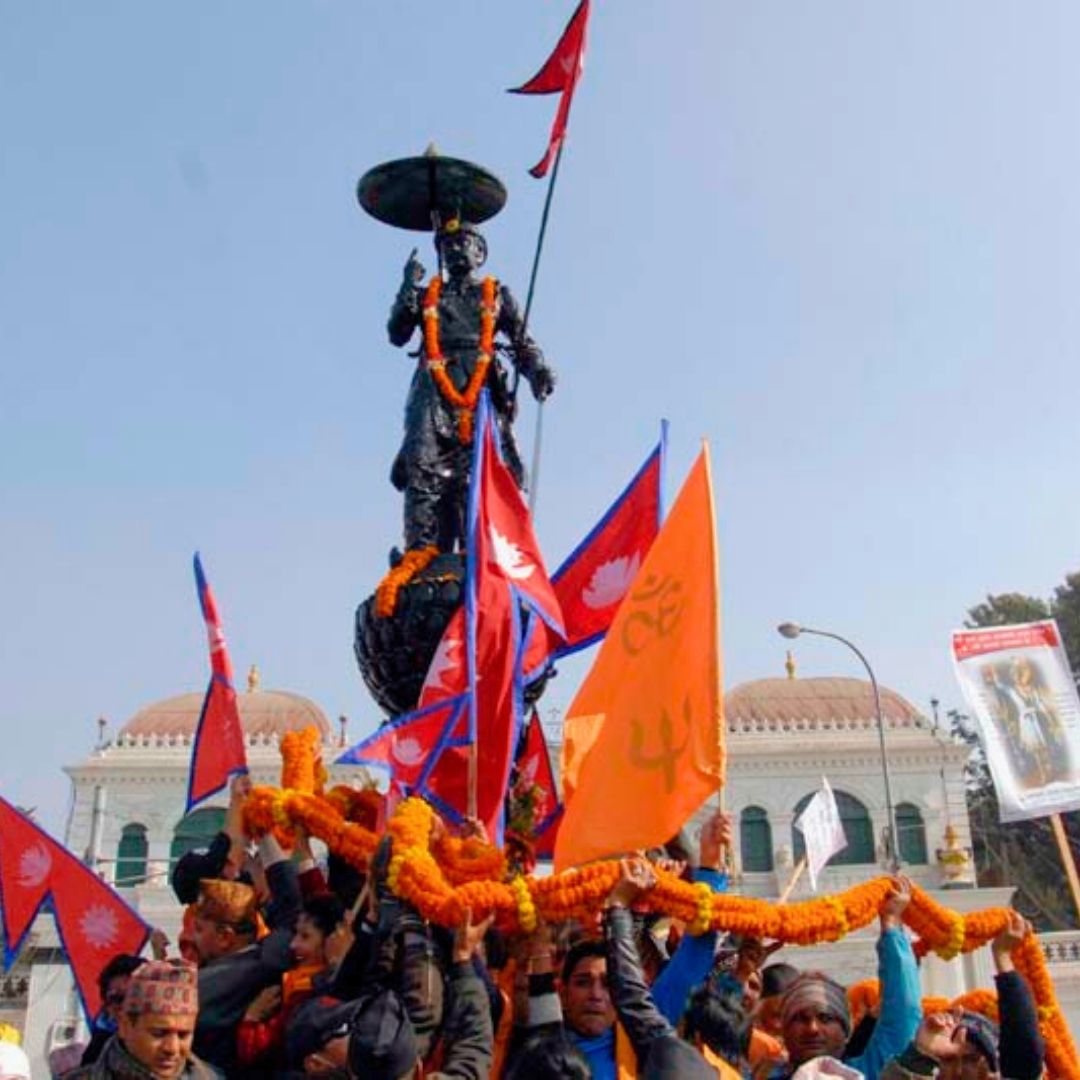
As a proud Nepali, I am deeply grateful to King Prithvi Narayan Shah. Because of his immense sacrifice and extraordinary vision, we have our sovereign nation, Nepal, today. He is truly the father of the nation, the architect who unified scattered kingdoms into one strong, independent country. Without him, we might not exist as Nepalis in the way we do now. I believe every Nepali should honor him with respect and pride.
Yet, in recent times, I have seen some people calling him hurtful names and criticizing him unfairly. This is totally incorrect and painful to witness. His vision gave us our identity and freedom – we would not be what we are as a nation without it. On his 304th birth anniversary – Poush 27, falling on January 11, 2026 – we must celebrate Prithvi Jayanti as National Unity Day with a full heart. If anyone says anything bad about him on this sacred day, it should not be tolerated. Now is the time for Hindu unity and to reclaim our legacy as a proud Hindu nation. Let’s roll back the changes that have weakened us and return to the strong foundations he laid.
Early Life and Rise of a Visionary King
Prithvi Narayan Shah was born on January 11, 1723 (Poush 27, 1779 BS) in the historic Gorkha Palace to King Nara Bhupal Shah and Queen Kaushalyavati Devi. From childhood, he displayed remarkable intelligence, courage, and ambition. Stories tell of his determination even as a young prince – training in warfare, studying neighboring states, and dreaming of a greater Nepal.
At just 20 years old, he ascended the throne of Gorkha after his father died in 1743. Gorkha was then a small hill kingdom, one among many. But Prithvi Narayan Shah saw beyond borders. He understood that divided states were easy prey for expanding empires – the British East India Company in the south and the Qing Dynasty in the north. His vision was clear: unite the Himalayan principalities into one unbreakable nation.
He prepared meticulously. He modernized his army, forged alliances through marriage and diplomacy, and studied the weaknesses of rival kingdoms. His approach combined military strength with political wisdom, setting the stage for one of history’s most remarkable unification campaigns.
The Great Unification: Building Modern Nepal
The unification campaign began in earnest with the capture of Nuwakot in 1744, a strategic town blocking access to the Kathmandu Valley. This victory opened the path eastward. Over the next decades, Prithvi Narayan Shah systematically brought the Baise (22) and Chaubise (24) principalities under one banner.
Key milestones included the annexation of Makwanpur, victories in the east against the Limbuwan and Kirat regions, and the decisive conquest of the wealthy Kathmandu Valley. In 1768, during Indra Jatra, his forces entered Kathmandu. The three Malla kings of Kathmandu, Patan, and Bhaktapur were defeated by 1769. He shifted the capital to Kathmandu, symbolizing the new center of power.
By his death in 1775, Nepal stretched from the Teesta River in the east to the Mahakali in the west – much larger than today’s boundaries in some directions. His successors continued expansion, but the core framework was his creation.
Importantly, he founded the modern Nepali Army. The brave Gorkhali soldiers, known worldwide for their valor, trace their lineage directly to his forces. He is rightfully regarded as the first Commander-in-Chief.
The Timeless Wisdom of Divya Upadesh
Among his greatest contributions is the Divya Upadesh – divine counsel delivered on his deathbed to his successors and courtiers. This document is a masterpiece of statecraft and philosophy.
He famously described Nepal as a “yam between two boulders” – a delicate root vegetable squeezed between mighty China and British India. His advice: maintain friendly relations with both but never become dependent on either. This policy of equidistance preserved Nepal’s independence for centuries.
He emphasized internal unity: “Nepal is a garden of four varnas and thirty-six castes.” This inclusive vision recognized Nepal’s diversity – Brahmin, Chhetri, Newar, Gurung, Magar, Rai, Limbu, Tharu, and countless others – and called for harmony among them. He warned against division, corruption, and foreign intrigue.
He promoted economic self-reliance: develop local trade, protect artisans, and avoid excessive imports. He stressed justice, strong defense, and cultural preservation. Even today, leaders quote Divya Upadesh when discussing national policy. It remains a guiding document for any Nepali seeking wisdom on governance.
Prithvi Jayanti: Traditions and National Celebrations
Prithvi Jayanti has been celebrated for generations, but in recent years, it has regained prominence as National Unity Day. Declared a public holiday, January 11 sees widespread events.
The Nepali Army plays a central role, reflecting its founding by the king. At Army Headquarters in Kathmandu, the Chief of Army Staff leads tributes – garlanding statues, presenting guards of honor, and organizing seminars on Divya Upadesh.
Across the country, people gather at his statues. The iconic one in front of Singha Durbar draws thousands. Presidents, prime ministers, ministers, and citizens offer flowers and wreaths. In Gorkha, his birthplace, special programs occur at the historic palace.
Parades, cultural shows, torch rallies, and unity marches mark the day. Youth organizations retrace the unification route from Gorkha to Kathmandu. Schools hold essay competitions, quizzes, and debates on his teachings. The media broadcasts documentaries and discussions.
In 2026, the 304th anniversary promises even grander celebrations, reminding us of our shared history.
Why Criticisms Are Misplaced and Harmful
No great leader escapes scrutiny, but some recent criticisms of Prithvi Narayan Shah go too far. Certain voices label him harshly, focusing on battles like Kirtipur (where resistance was fierce and consequences severe) or claiming his unification suppressed local identities.
These views often emerge from modern lenses of federalism or ethnic rights movements. They gained traction after the 2008 Republic declaration, as part of rewriting history for inclusivity.
However, context matters. In the 18th century, conquest was the norm worldwide – from Europe to Asia. Without forceful unification, Nepal would likely have fragmented or been colonized. His campaigns were not about ethnic domination but national survival.
Moreover, Divya Upadesh shows his inclusive intent. He integrated diverse groups into the state structure. Criticizing him as a villain ignores how he created the very platform for today’s debates on rights and representation.
As a Nepali, I find such attacks deeply hurtful. They divide us when we need unity most. On his birth anniversary, we should defend his honor firmly. No tolerance for baseless insults against the man who gave us our nation.
The Hindu Kingdom: Strength and Identity
For over 240 years after Prithvi Narayan Shah, Nepal proudly stood as the world’s only Hindu kingdom. The Shah kings were seen as incarnations of Lord Vishnu, protectors of dharma. Pashupatinath, the national deity, symbolized this sacred bond.
This Hindu identity unified diverse communities under shared values – tolerance, karma, and cultural traditions. Festivals like Dashain, Tihar, and Teej bound us together. Our laws, customs, and calendar reflected this heritage.
Nepal’s Hindu status earned global respect. It was a beacon of ancient civilization surviving modernity. Foreign scholars admired how we preserved Sanatan Dharma amid change.
The Painful Shift: Secularism and Its Consequences
Everything changed after 2006-2008. The monarchy was abolished, and Nepal declared a secular federal republic. Many welcomed promises of equality and inclusion.
But nearly two decades later, the results disappoint many. Political instability, frequent government changes, rampant corruption, and economic stagnation plague us. Federalism has deepened ethnic divisions rather than resolved them.
Secularism, imposed suddenly, removed constitutional protections for Hindu traditions. Cow slaughter bans weakened, missionary activities increased, and cultural erosion accelerated. Temples face neglect, while foreign influences grow.
I believe this has rotted our core. Once a proud, united Hindu nation, we now seem adrift. Filthy politicians, driven by power rather than patriotism, betrayed Prithvi Narayan Shah’s legacy. They dismantled institutions that provided stability for centuries.
Movements now rise demanding restoration – a Hindu rashtra again, perhaps with a constitutional monarchy. Parties like the Rastriya Prajatantra Party lead this call. Protests and rallies echo the sentiment: roll back secularism, reclaim our identity.
This 304th anniversary is the perfect moment to amplify these voices. Hindu unity is essential. We must protect our ancient civilization from further decay.
A Personal Call to Action for All Nepalis
Fellow Nepalis, wherever you are – in the hills, Terai, or abroad – join me in honoring King Prithvi Narayan Shah this January 11. Read Divya Upadesh. Discuss his teachings with family. Participate in events. Teach children why he matters.https://www.hamropatro.com/
Stand firm against those who disrespect him. His sacrifices demand our loyalty. Unity is his greatest lesson – let us live it.
The time has come to rebuild Nepal on its foundations: strong, sovereign, culturally proud. Restore the Hindu Rashtra status. Strengthen institutions rooted in our history. Only then can we overcome today’s challenges.
Prithvi Narayan Shah gave us Nepal through blood and vision. Now, it’s our turn to protect and strengthen it for future generations.Balen to Run for PM: Nepal’s Youth Icon Shakes Up Politics Ahead of 2026 Elections
Jai Nepal! Jai Prithvi Narayan Shah! Jai Hindu Rashtra!
1 thought on “A Proud Nepali’s Tribute: Celebrating the 304th Birth Anniversary of King Prithvi Narayan Shah, the Father of Our Nation”