
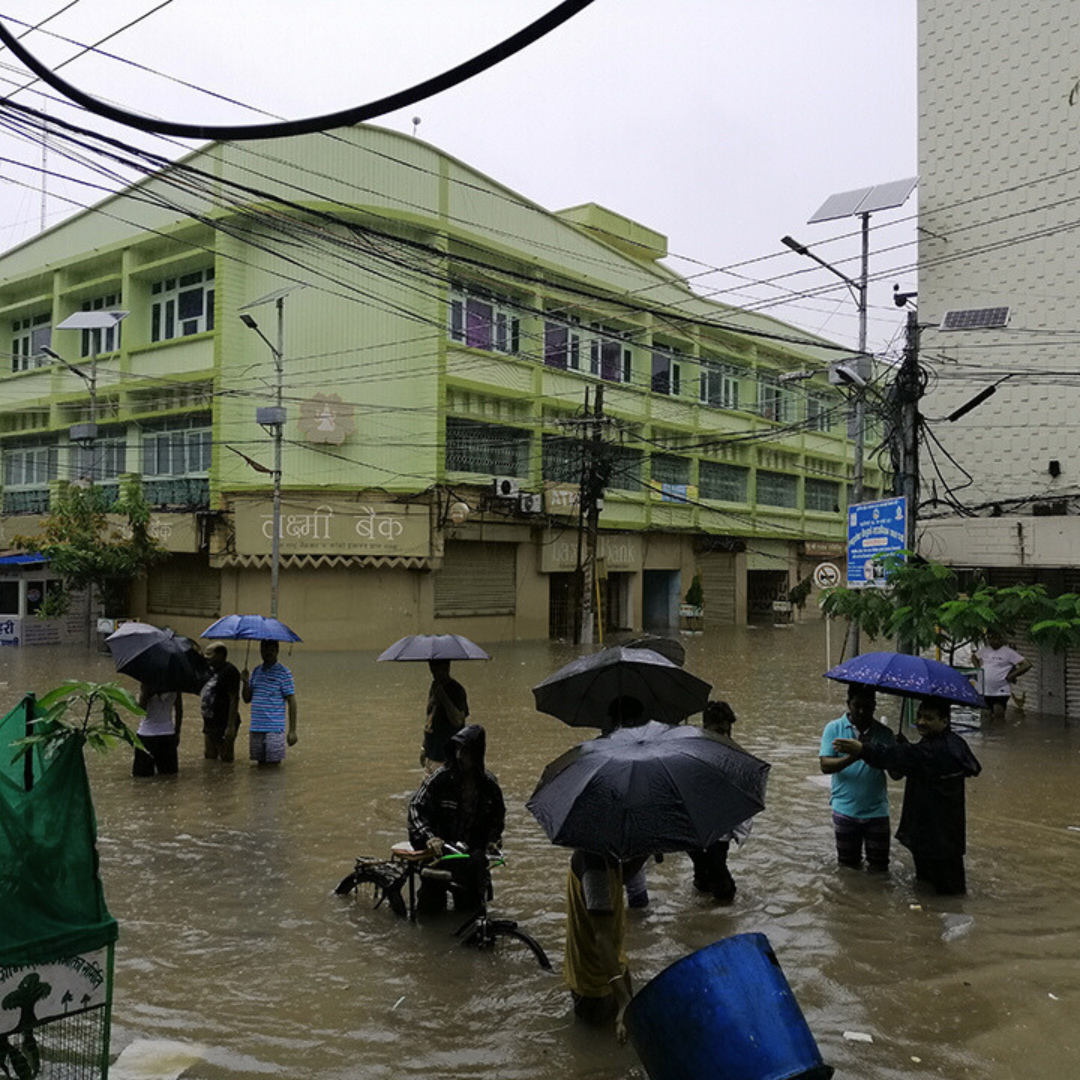
Kathmandu, October 4, 2025 – Heavy rainfall hits Birgunj, making it the wettest place in Nepal over the past 12 hours. According to the Department of Hydrology and Meteorology, Birgunj in Parsa district recorded a staggering 143 millimeters of rain. This intense downpour has affected many parts of the country, especially the central and eastern regions, including the Terai plains. The heavy rain has raised concerns about flooding, landslides, and disruptions to daily life across Nepal.
Widespread Rainfall Across Nepal
The heavy rainfall hits Birgunj, but it’s not alone. Nearby areas like Bara saw 140.4 mm of rain, while Gaur in Rautahat recorded 129 mm, and Maheshpur, also in Rautahat, got 124 mm. The weather department called the rain in Bara and Parsa “extremely heavy,” meaning it was much more intense than usual. The central part of Nepal, especially the flat Terai region, has been hit the hardest. From Nawalparasi in the west to Dhanusha in the east, rain has poured across a wide area, affecting towns, villages, and farmlands.
In total, 14 districts, including Sindhupalchok, Dolakha, and the Kathmandu Valley, saw more than 50 mm of rain in the last 12 hours. Over 50 weather stations across Nepal also reported rainfall between 30 mm and 50 mm. This shows how widespread the rain has been, soaking many parts of the country and creating challenges for residents.
Why Is This Happening?
The heavy rainfall hits Birgunj and other areas because of moist air coming from the Bay of Bengal. This is a common cause of rain in Nepal during the post-monsoon season, which happens around September and October. The moist air brings a lot of water vapor, leading to heavy showers and thunderstorms. The weather department also warned that another weather system might become active soon, which could bring even more rain tonight. This means people in many parts of Nepal should expect wet conditions to continue for a while.
Impacts on Communities
When heavy rainfall hits Birgunj and other low-lying areas, it can cause big problems. The Terai region, where Birgunj is located, is flat and close to rivers, making it prone to flooding. Heavy rain can overflow rivers, damage crops, and make roads slippery or unusable. In some areas, homes and businesses might get flooded, and people may need to move to safer places. Landslides are another worry, especially in hilly areas like Sindhupalchok and Dolakha, where heavy rain can loosen soil and rocks, causing them to slide down.
The heavy rainfall hits Birgunj at a time when people are still recovering from the monsoon season. Farmers, shopkeepers, and daily wage workers may face losses if the rain damages crops or stops work. The government and local authorities are watching the situation closely, asking people to stay safe and avoid risky areas like riverbanks or steep hills.https://www.hamropatro.com/
What Should People Do? The Department of Hydrology and Meteorology has advised everyone to stay alert. If you live in a low-lying area, keep an eye on local rivers and streams, as they could rise quickly. Avoid traveling during heavy rain, especially in areas prone to flooding or landslides. It’s also a good idea to check weather updates regularly. You can visit the department’s official website or listen to local news for the latest information and alerts.
The heavy rainfall hits Birgunj and other parts of Nepal, reminding us how powerful nature can be. By staying prepared and following safety advice, people can reduce the risks and stay safe during this rainy period. More updates will come as the weather situation changes, so keep checking reliable sources for the latest news.https://theinfohatch.com/weather-update-nepal-life-disrupted/
1 thought on “Heavy Rainfall Hits Birgunj and Nepal’s Central Regions”