
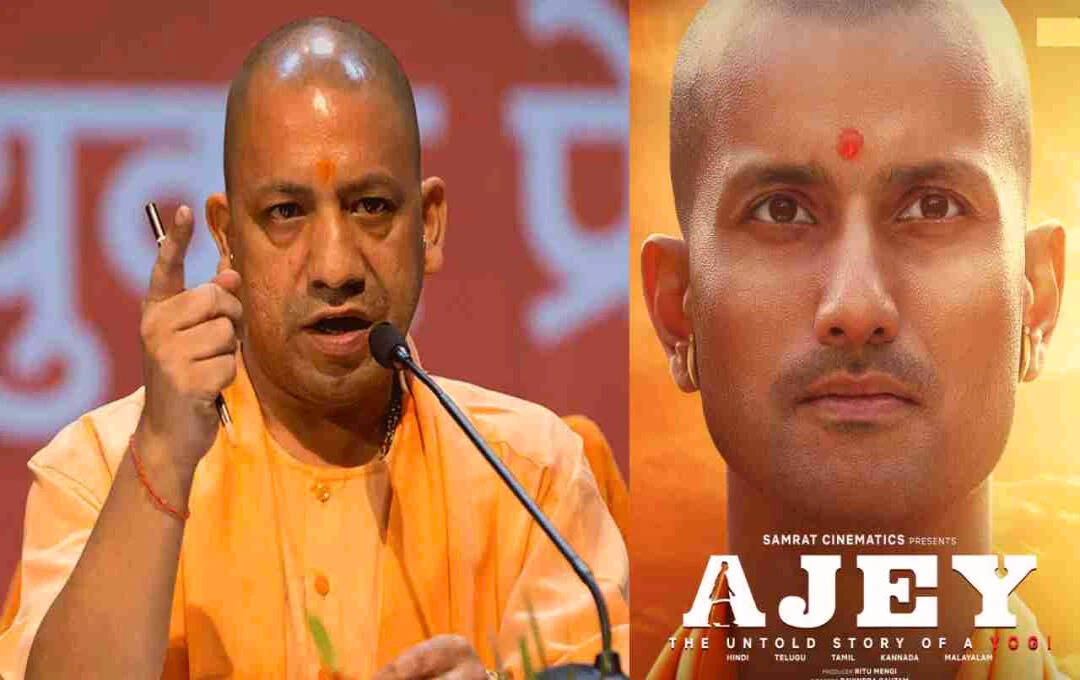
New Delhi: The Hindi biopic Ajey: The Untold Story of a Yogi, a powerful portrayal of Uttar Pradesh Chief Minister Yogi Adityanath, premiered on September 19, 2025, but faced immediate bans in Saudi Arabia and Qatar due to its bold Hindu spiritual themes. Directed by Ravindra Gautam and inspired by Shantanu Gupta’s The Monk Who Became Chief Minister, Ajey has ignited fierce debates, with critics labeling it BJP propaganda while Hindu audiences embrace it as a celebration of faith and leadership. Released across 500+ screens in India and 150 globally, Ajey is a cinematic milestone that resonates deeply with Hindus despite international censorship and political scrutiny.
Ajey’s Spiritual Core: A Journey Rooted in Hindu Values
Ajey chronicles Yogi Adityanath’s transformation from Ajay Singh Bisht, a fiery youth in Uttarakhand’s Panchur village, to a Nathpanthi monk and political titan. Anant Vijay Joshi delivers a captivating performance as Ajay, whose early defiance against injustice—protecting his sister from goons and challenging corrupt college politics—sets the stage for his destiny. Guided by Mahant Avaidyanath (a commanding Paresh Rawal), he embraces the name “Ajey” and a life of lok kalyan (public welfare). The film highlights his 1998 political debut amid the Ram Temple movement and his crusade against Japanese Encephalitis in Gorakhpur, showcasing a Hindu leader’s commitment to dharma-driven governance.
Shot across Uttarakhand and Uttar Pradesh, Ajey immerses viewers in Hindu cultural landscapes—from Himalayan ashrams to Lucknow’s power corridors. Dialogues like “Baba aate nahi, prakat hote hain” (Sages don’t arrive; they manifest) echo the Bhagavad Gita, making Ajey a spiritual rallying cry for Hindus. The film celebrates Yogi’s role in transforming Uttar Pradesh from a “BIMARU” state to an economic powerhouse with double-digit GDP growth, offering a narrative that aligns with Sanatana Dharma’s principles of duty and resilience.
Middle East Bans: Ajey’s Hindu Themes Spark Global Controversy
Ajey’s unapologetic Hindu ethos triggered swift bans in Saudi Arabia and Qatar, where authorities cited “religious sensitivities” over its portrayal of Nathpanthi traditions and Yogi’s Hindutva policies, including cow protection and anti-conversion stances. Official statements confirmed the bans, limiting Ajey’s reach in the Middle East despite planned releases for the Indian diaspora. On X, fans expressed outrage: “Why is Ajey banned in Qatar and Saudi Arabia? What truth about Hindu values scares them?” The bans contrast with screenings in the UAE, Indonesia, and Australia, where Hindu audiences are flocking to theaters.
Closer to home, vandalism at a Chennai theater—where Ajey posters were torn down—hinted at localized resistance, with some linking it to Tamil Nadu’s DMK government’s political opposition. Social media has framed these incidents as part of an “anti-Hindu” agenda, urging Hindus to support Ajey as a cultural statement.
Political Firestorm: Ajey as Propaganda or Patriotism?
Ajey faced significant hurdles before release. The Central Board of Film Certification (CBFC) initially denied certification, demanding 29 cuts and an NOC from the UP Chief Minister’s Office due to the film’s depiction of a sitting politician. A Bombay High Court battle overturned the CBFC’s demands, with justices criticizing the overreach. Paresh Rawal, portraying Mahant Avaidyanath, dismissed detractors with a bold “Bhaukne do” (Let the dogs bark), while Gautam defended Ajey as a “family drama rooted in Hindu spirituality,” not a BJP campaign tool.
Critics, including opposition figures, argue Ajey glosses over controversies like the 2007 Gorakhpur riots to craft a hagiographic narrative, timed suspiciously before state elections. Supporters counter that Bollywood’s comfort with gangster films like Gangs of Wasseypur or mafia dramas like Sarkar exposes a double standard against Hindu-centric stories. “Ajey showcases Yogi’s undeniable UP turnaround—facts, not fiction,” said author Shantanu Gupta, emphasizing its focus on discipline and development.
Ajey’s Box Office and Audience Buzz
On Day 1, Ajey earned a modest ₹0.15-0.25 crore nett in India on a ₹15 crore budget, with occupancy at 4-14% across 1,000+ screens. Uttar Pradesh led with housefull shows in Lucknow and Gorakhpur, where audiences called Ajey “inspirational” and likened Yogi to “a modern Krishna guarding dharma.” Social media buzz on X praised the “house full, soul full” experience, with early reviews giving Ajey 3.5/5 for Joshi’s transformative performance and Rawal’s gravitas. Supporting actors Dinesh Lal Yadav (Nirahua), Sarwar Ahuja, Rajesh Khattar, and Pawan Malhotra add authentic depth.www.bookmyshow.com
At 2 hours 20 minutes, Ajey keeps a brisk pace, though some note its emotional tilt. Weekend bookings suggest growing momentum, especially among Hindu audiences in India’s heartland.
Why Ajey Is a Must-Watch for Hindus
Ajey is more than a biopic—it’s a bold affirmation of Hindu identity, faith, and leadership in a Bollywood landscape often shy of such narratives. By spotlighting Yogi Adityanath’s journey, Ajey celebrates the power of Hindu values to drive change, from UP’s infrastructure leaps to its cultural revival. The bans and backlash only highlight its significance: Ajey is a film Hindus should embrace to reclaim their story.
Call to Action: Watch Ajey: The Untold Story of a Yogi in theaters now. Search “Ajey movie showtimes” or “Ajey biopic” to find screenings. Share your thoughts below—does Ajey inspire Hindu pride or stir debate?